




Key Takeaways
- Long-distance moves in Canada are priced by shipment weight and distance, not by the hour. The heavier your shipment and the farther it travels, the more it costs.
- The most important check for any long-distance mover: verify they are a member of the Canadian Association of Movers at movers.net. CAM membership means the company has agreed to professional standards and has a complaint resolution process.
- Get at least three written quotes before deciding. A quote that is dramatically cheaper than the others is a reason to ask more questions, not a reason to celebrate.
- For long-distance moves, your delivery will come with a window of dates, not a guaranteed single day. Understand that window before you book accommodation at the other end.
- Ask whether the company doing the move is the same company you are booking with, or whether they will subcontract to someone else.
- Great Canadian Van Lines is a CAM-registered van line with weekly departures from major Canadian cities. We are happy to be one of the companies you get a quote from.
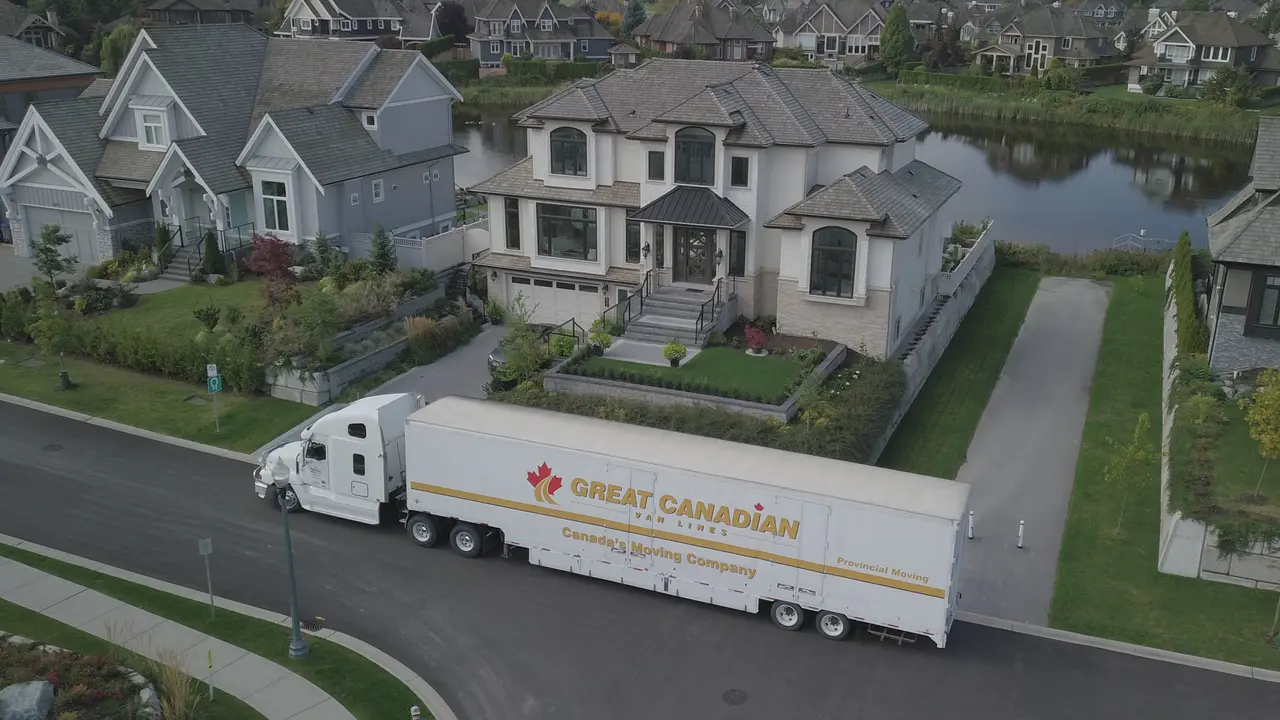
A long-distance move in Canada is a fundamentally different kind of job from a local move. Your belongings are going to be on a truck for days, potentially consolidated with other people’s shipments, crossing provinces with their different regulations and road conditions. The stakes are higher and the things that can go wrong are harder to fix quickly when something is 3,000 kilometres away.
We get calls all the time from people who booked a mover that looked fine online and ended up with a nightmare. Missing items, deliveries weeks late, impossible-to-reach customer service, final bills that doubled after the truck was loaded. These things happen in this industry, and they happen more often with companies that are not set up to do long-distance moves properly.
This guide covers what actually makes a long-distance mover trustworthy, what to look for when you are comparing companies, and the questions that can save you from a bad experience.
Want a quote from a long-distance mover you can verify? Get a free estimate from Great Canadian Van Lines and we will walk you through the whole process.
What Makes Long-Distance Moving Different
For a local move, a company can show up with two people and a rented truck and do a competent job. Long-distance is a different category entirely. You need a company with the actual infrastructure to complete a multi-day, multi-province delivery: their own fleet of long-haul trucks, their own warehouse facilities for interim storage, proper cargo insurance for the full route, and dispatch and tracking systems that let them actually find your shipment if something goes wrong.
A company that does great local moves in one city is not automatically equipped for a cross-country job. When you are evaluating long-distance movers specifically, the questions you need answered are different from what you would ask a local mover.
Weight-based pricing
Local moves are priced by the hour. Long-distance moves are priced by weight and distance. Your final bill is calculated from how much your shipment actually weighs when the truck is loaded and how far it is going. Most long-distance movers provide a non-binding estimate based on an assessed weight, which is then confirmed by actual weigh-ins on moving day. You have the right to be present at both weigh-ins and to request a re-weigh if you think the figures are off.
Because cost is tied to weight, decluttering before a long-distance move has real financial value. Every 1,000 pounds you leave behind is money off your bill.
Delivery windows
Unlike a local move where the truck leaves your place and arrives at the new one the same day, long-distance shipments travel with other customers’ belongings on shared trucks. That means your delivery will come with a window of dates rather than a guaranteed single day. The window might be three days or it might be a week or more depending on the route. Understand that window before you book accommodation or make arrangements that depend on a specific arrival date.
New to long-distance moving? Read our complete guide to moving across Canada, where we cover timelines, costs, and what to prepare for before moving day.
What to Look for in a Long-Distance Moving Company
CAM membership
The Canadian Association of Movers is the only national body that monitors professional moving companies in Canada. There is no government licence required to operate as a mover, which means CAM membership is one of the few meaningful signals that a company has been held to a professional standard. You can verify any company’s membership at movers.net in about 30 seconds. For a long-distance move, we would not book with a company that is not on that list.
Their own fleet and infrastructure
Ask directly: are you the company that will physically complete my move, or will you subcontract it? Some businesses operate as brokers, taking your booking and your deposit and then finding another company to do the actual move. When something goes wrong with a brokered move, accountability disappears fast. You have a contract with the broker, not with the company that has your furniture. The best long-distance movers own their trucks and employ their crew.
Cargo insurance
Ask to see proof of cargo insurance before you sign anything. The minimum required by CAM is $250,000 in cargo coverage. Confirm the policy is active and that the expiry date is after your move date. A mover who hesitates to show you this document is telling you something important.
Written, detailed estimate
Any legitimate long-distance mover will give you a written estimate that specifies the estimated weight, the rate, the total cost, any additional charges that might apply, and the delivery window. If a mover will not put the estimate in writing, do not use them. The estimate is your protection if the final bill looks different from what you were told.
BBB standing and Google reviews
Check the BBB rating and read the Google reviews, but read them intelligently. A company with 400 reviews and a 4.7 rating is a more meaningful signal than a company with 12 reviews and a perfect 5.0. For Google reviews, go straight to the one-star ones and see how the company responds. A company that engages professionally with unhappy customers and takes responsibility where warranted is showing you something about their character. A company that argues with every negative review is showing you something too.
Want a full checklist for vetting any moving company? Read our guide to how to choose a moving company where we cover CAM, BBB, insurance certificates, WCB clearance, and the questions to ask before you sign anything.
Red Flags to Watch For
- A quote that is dramatically lower than everyone else. This is not a deal. It is a signal. Long-distance moving has real fixed costs: fuel, crew, truck, insurance, warehouse. A company pricing significantly below market is either cutting corners on something that matters or planning to add charges after your belongings are loaded.
- Large upfront cash deposit required. Standard practice in Canadian moving is to collect payment at or after delivery. A company demanding a large cash deposit before your move has started is not operating within industry norms.
- No physical address. Real van lines have warehouses, terminals, and offices you can verify. A company that exists only as a website and a phone number has no accountability if something goes wrong.
- Reluctance to provide insurance documents. Any professional mover should produce a cargo insurance certificate without hesitation. If they stall or deflect, walk away.
- Vague answers to direct questions. When you ask who will physically do your move, what insurance covers your shipment, what is the delivery window, and whether the estimate is binding or non-binding, you should get clear, specific answers. Vague or evasive answers to basic questions are a warning.
How Great Canadian Van Lines Compares
We are one of the companies you are probably comparing right now, so we will be straightforward about where we stand.
We are a Canadian-owned van line headquartered in Surrey, BC, operating since 1992. We are a registered CAM member, hold an A+ BBB rating, and carry a 4.9 Google rating based on thousands of customer reviews. We own our trucks and employ our crew. We run weekly departures from major Canadian cities to major Canadian cities. We provide written estimates, real weight-based pricing, and a service assurance process if something goes wrong.
We are not the cheapest option you will find. If the lowest price is the only thing that matters, there are companies that will quote less than us. What we can tell you is that our claim rate is one of the lowest in the industry, our reviews are genuine, and our accreditations are verifiable.
Want to compare us to other registered Canadian van lines? See our guide to CAM-registered van lines in Canada, with current BBB and Google ratings for each company.
Frequently Asked Questions
How much does a long-distance move in Canada cost?
It depends on how much you are moving and how far it is going. A one-bedroom apartment moving from Toronto to Vancouver (roughly 4,300 km) typically runs $3,500 to $6,500. A three-bedroom house on the same route typically runs $9,000 to $16,000. Moving from Vancouver to Calgary is a shorter distance and costs less. Get an in-home estimate for the most accurate number.
How long does a long-distance move in Canada take?
Transit times vary by route and time of year. Most major city to major city routes run one to two weeks for delivery after pickup. Your mover will give you a specific delivery window when you book. Build your accommodation and work arrangements around that window, not around a single date.
What is the difference between a binding and non-binding estimate?
A binding estimate is a guaranteed price that does not change based on final shipment weight. A non-binding estimate is based on an assessed weight and may change after the actual weigh-in. Most long-distance moves in Canada use non-binding estimates confirmed by weigh-ins. Ask your mover which type they are providing and confirm it is in writing.
Can I watch my shipment being weighed?
Yes. You have the right to be present at both weigh-ins (before and after loading) and to request a re-weigh if you believe the figures are incorrect. A reputable mover will have no hesitation with this.
What happens if my belongings are damaged during a long-distance move?
Note any damage on the delivery receipt before signing. Then contact the moving company promptly. Most valuation policies have a filing window, so do not wait. Document damage with photographs before moving anything. A company with a proper service assurance process (like ours) has a defined response timeline for damage claims.
Ready to get a quote? Request a free long-distance moving estimate from Great Canadian Van Lines, we will give you a written estimate, explain every cost, and answer any question before you commit.
