
Key Takeaways
- The moving industry in Canada is not government regulated. Anyone with a truck can legally operate as a mover, which means you have to do your own checks.
- Always verify that a moving company is a member of the Canadian Association of Movers (CAM) before booking. You can check membership at movers.net.
- Check the company’s BBB (Better Business Bureau) rating. Look for an A or A+ rating and read through the complaint history, not just the grade.
- Ask to see proof of cargo insurance. The minimum required by CAM is $250,000 in cargo coverage. Make sure the policy is active and not expired.
- Ask for a WorkSafe (Workers Compensation Board) clearance letter. If a mover gets injured on your property and they do not have this coverage, you could be held responsible.
- Get at least three written quotes before choosing. A quote that is much lower than the others is usually a red flag, not good luck.
- Never pay a large deposit before your move. Reputable movers typically collect payment at or after delivery, not entirely upfront.
- Avoid companies that operate only by phone or website with no verifiable physical address. Legitimate movers have real offices and real infrastructure.
Choosing a moving company sounds simple. You search online, get a few quotes, pick one, and move on. But the moving industry in Canada has a real problem: there is almost no regulation. Anyone can start a moving company without a licence, without proper insurance, and without any kind of certification. That means you can easily end up with a company that looks professional online but cuts corners in ways that matter.
The good news is that checking a mover out properly doesn’t take long. You just need to know what to look for. This guide walks you through the four main checks every Canadian should do before booking a mover, plus the questions to ask and the warning signs to watch out for.
Why You Can’t Just Pick Any Mover
In Canada, the moving industry is not regulated by the government the way that industries like healthcare or finance are. There is no national licence required to operate a moving company. No mandatory insurance. No government body keeping track of who is doing good work and who is not.
What that means in practice is that almost anyone can set up a website, list a phone number, and start taking moving bookings. Some of these operations are legitimate small businesses. Others are not.
Moving scams are a real thing in Canada, and they tend to follow a pattern: a low quote gets you to sign, you pay a deposit, your belongings get loaded, and then the price jumps significantly before anything gets unloaded. Once your furniture is on someone else’s truck, you have very little leverage.
The checks in this guide are how you separate the legitimate operations from the risky ones. None of them take more than a few minutes, and together they give you a solid foundation for making a confident choice.
The Four Things to Check Before You Book
1. Canadian Association of Movers (CAM) Membership
The Canadian Association of Movers is the only national organization in Canada that monitors and keeps records of professional moving companies. CAM is not a government body, but it is the closest thing the industry has to a regulator. Companies that join CAM have agreed to follow a professional code of conduct, carry proper insurance, handle complaints through a formal process, and maintain standards around how they quote and conduct moves.
This matters to you because if something goes wrong with a CAM member company, there is a process to resolve it. With a non-member, there is no such backstop.
To check if a mover is a CAM member, go to mover.net and search for the company name. It takes about 30 seconds. If a company is not listed, that is a meaningful red flag for a long-distance move.
2. Better Business Bureau (BBB) Rating
The BBB grades businesses based on how they handle customer complaints. A company with an A or A+ rating has generally dealt with complaints professionally over time. A lower rating, or a pattern of unresolved complaints, tells you something useful before you hand over any money.
To check a mover on the BBB, go to bbb.org and search for the company by name. You are looking for three things:
- The letter grade (aim for A or higher)
- The number of complaints filed
- And whether those complaints were resolved
A company with 50 complaints that it dealt with professionally is a very different story from a company with 5 complaints it ignored.
Read the actual complaints too, not just the grade. If multiple customers are reporting the same kind of problem, that pattern is worth paying attention to even if each complaint was technically resolved.
If a mover is not listed on the BBB at all, that is not automatically a dealbreaker for a small local mover. But for a long-distance or national company, it raises questions worth asking.
3. Cargo Insurance Certificate
Here is one that a lot of people do not think to ask for: proof of cargo insurance.
Cargo insurance covers your belongings while they are on the truck. Without it, if your items are damaged or lost in transit, you have no real recourse. The minimum cargo coverage required by the Canadian Association of Movers is $250,000.
Before you book, ask the mover to send you a copy of their certificate of insurance. Check two things:
- The cargo section shows at least $250,000 in coverage
- The policy expiry date is after your moving date
A legitimate mover will have no hesitation providing this. A mover who is reluctant to share it is telling you something.
4. WorkSafe (Workers Compensation Board) Clearance
This is the one most people have never heard of, but let’s break it down.
If one of the movers gets injured while working on your property and their company does not have Workers Compensation coverage, you could potentially be held responsible for their medical costs and lost income.
To protect yourself, ask the mover for a clearance letter from the provincial Workers Compensation Board (called WorkSafe BC, WSIB in Ontario, WCB in Alberta, and similar names in other provinces). This letter confirms that the company is in good standing with its provincial workplace safety authority.
You can also request the clearance letter yourself directly from the provincial board if you prefer. A reputable mover will have this in order and should not mind you wanting to check.
Getting Quotes and Comparing Them Fairly
Once you have verified that a mover checks out on the four criteria above, the next step is getting quotes. Here is how to do this in a way that gives you useful information rather than just numbers to compare.
Get at Least Three Written Quotes
Always get at least three quotes before making a decision. This gives you a realistic sense of the price range for your move and makes it much easier to spot a quote that is suspiciously low. Getting quotes from multiple companies also gives you more chances to ask questions and get a feel for how each company communicates.
Always get quotes in writing. A verbal quote is not worth much if there is a dispute later about what was agreed.
Make Sure You Are Comparing the Same Things
Moving quotes can look very different on the surface even when they cover the same job. Before comparing numbers, check that each quote covers the same scope:
- The same list of items
- The same services (packing or no packing, stairs, long carry distances)
- The same insurance terms
- The same delivery window
A quote that is $1,000 cheaper than the others might not include fuel surcharges, or might have a longer delivery window, or might not include the insurance coverage you need. Always ask what is and is not included.
Watch Out for the Unusually Low Quote
It sounds good when one quote comes in much lower than the others. In practice, a quote that is dramatically cheaper than three other professional companies is almost always a sign of something. The mover may be cutting corners on insurance or staffing. They may be planning to add charges once your belongings are loaded. Or they may simply not have the infrastructure to complete a long-distance move reliably.
Getting a lower price is great. Getting a suspiciously low price is a reason to ask more questions.
|
What to Ask |
Why It Matters |
|
Is your quote binding or non-binding? |
A binding quote is a guaranteed price. A non-binding quote is based on estimated weight and may change after the actual weigh-in. |
|
What extra charges might apply? |
Ask specifically about fuel surcharges, stair fees, long-carry fees, and packing material costs. Get the full list in writing. |
|
What is the delivery window? |
Long-distance moves usually have a delivery window, not a single guaranteed date. Know the window before you book accommodation at the other end. |
|
Who will physically do my move? |
Some companies book your job and subcontract the actual move to a different company. Ask whether the crew is their own employees or a third party. |
|
Can I have the estimate in writing? |
Always. If they resist putting the quote in writing, do not book with them. |
How to Leverage Reviews Properly
Reviews are one of the most useful tools for choosing a mover. A star rating on its own does not tell you much, so here are a few tips to use review data to your advantage.
Look at Volume and Recency
A company with a 4.8 rating from 800 reviews collected over several years is a very different thing from a company with a 5.0 rating from 12 reviews posted over the last month. High volume across a long period of time is much harder to fake and much more meaningful as a signal of consistent quality.
Read the One-Star Reviews
The one-star reviews tell you more about a company than the five-star ones. Don’t look for the total number of bad reviews, look for the patterns. If multiple people are reporting the same problem, that issue is worth taking seriously.
Look at How the Company Responds
How a moving company responds to negative reviews is one of the most reliable signals of how they will treat you if something goes wrong. A company that engages honestly, takes responsibility where they should, and explains what happened is showing you real character. A company that argues with every dissatisfied customer, or never responds at all, is probably not one you should trust to move your belongings.
Check the BBB Complaint History Too
Google reviews and BBB complaints are two separate data sources, and sometimes they don’t tell the same story. A company might have strong Google reviews but a pattern of unresolved formal complaints filed through the BBB. Checking both gives you a more complete picture.
Understanding the Different Types of Moving Companies
Not all moving companies are the same, and understanding the difference helps you know what you are actually getting when you book. Let’s look at the difference:
Van Lines
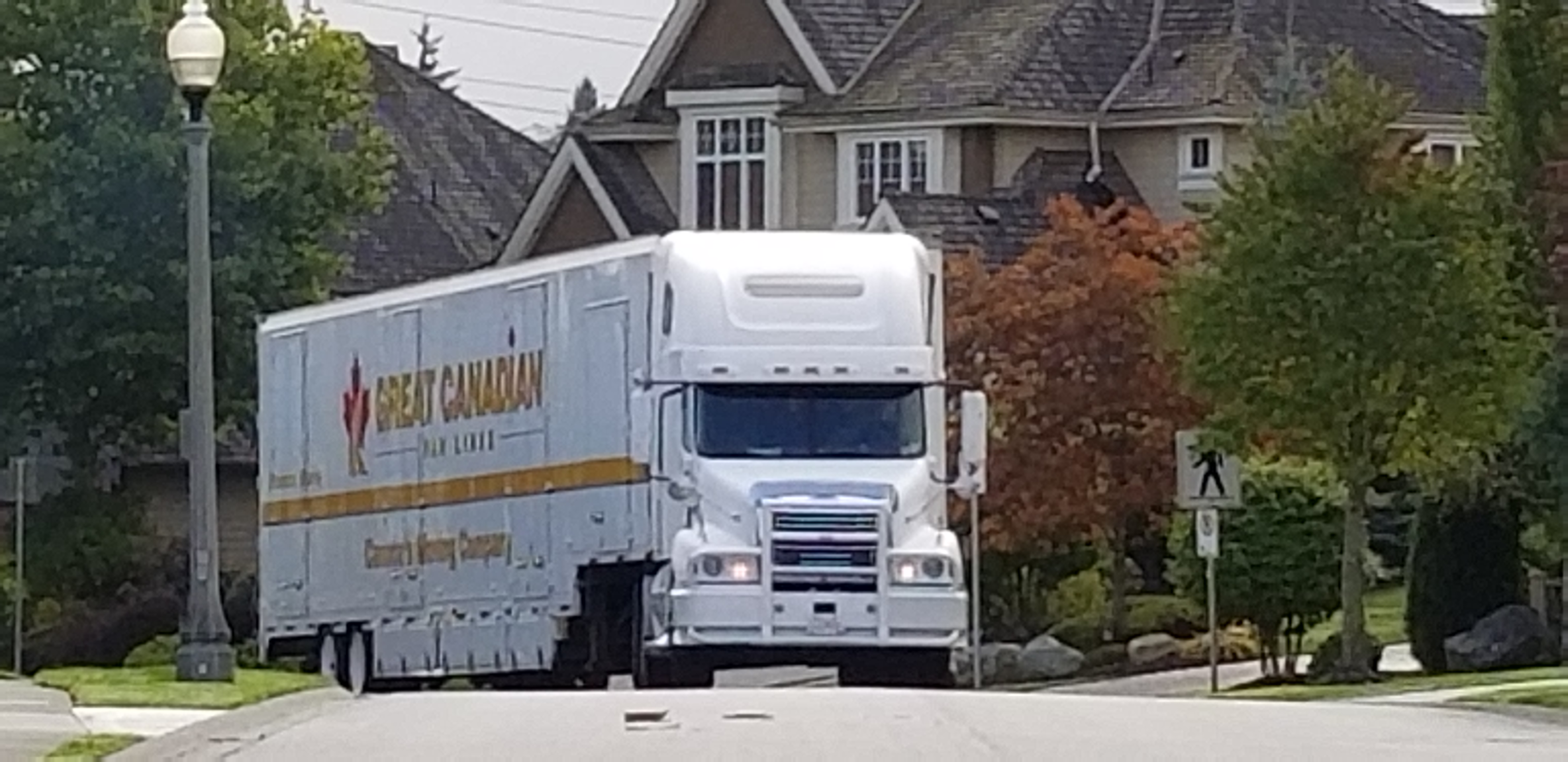
Van lines are large, nationally operating moving companies with their own trucks, warehouses, and crews across Canada. They are structured to handle long-distance and cross-country moves reliably because they have the infrastructure to do it.
For a long-distance move, booking directly with a registered van line is generally the most reliable option. You know who you are dealing with, you have a clear point of contact, and the company has the scale to actually complete a cross-country delivery.
Agent-Based Movers
Many moving companies are agents of a van line rather than the van line itself. An agent is a local or regional mover that is affiliated with a larger van line, and books moves on their behalf.
This can work perfectly well, but it is worth understanding who you are actually dealing with. Ask whether the mover you are talking to is the company that will physically complete your move, or whether they will be handing it off to a van line partner.
Brokers
Some businesses that look like moving companies are actually brokers. They take your booking and your deposit, then find another company to complete the actual move. The problem with this model is that you have a contract with the broker, not with the mover who shows up on your doorstep. If something goes wrong, accountability becomes complicated fast.
Always ask directly: ‘Will you be completing this move with your own crew, or will you be subcontracting it to another company?’
Small Local Movers
For a short local move within the same city, a smaller local moving company can be a perfectly good and more affordable option. They may not be CAM members or have BBB ratings, but for a local job with a short transit time the risk profile is lower. Even so, checking for cargo insurance and WCB coverage is still worth doing, and getting the quote in writing still applies.
Red Flags to Watch Out For
Here are the warning signs that should make you pause before booking any moving company.
- They will not give you a written quote. Any legitimate mover will put their estimate in writing without hesitation. No written quote means no protection for you if the price changes.
- They ask for a large cash deposit before the move. Standard practice in the industry is to collect payment at or after delivery. A company that wants a large upfront cash payment before your belongings have moved anywhere is not following professional norms.
- Their quote is dramatically lower than everyone else. We covered this above. A price that seems too good to be true usually is.
- They have no verifiable physical address. Real moving companies have offices, warehouses, and terminals you can look up. A mover operating from a mobile number and a website with no address is a company with no accountability.
- They cannot show you proof of insurance or WCB coverage. Any professional mover should be able to produce these documents quickly. Hesitation or refusal is a serious warning sign.
- They are not on the CAM website. For a long-distance or cross-country move, this is a significant concern. Check at movers.net.
- They pressure you to book immediately. Legitimate companies do not need to rush you into a decision. High-pressure tactics are a classic sign of a company that does not want you to have time to do your research.
- They show up with a rented truck. Full-service long-distance movers operate their own fleet of trucks. A company showing up with a rented truck for a long-distance job is not set up to complete that move professionally.
What a Good Moving Company Actually Looks Like
A good moving company answers your questions clearly and without frustration. They provide a written estimate that breaks down all costs. They can show you their CAM membership, their BBB standing, their cargo insurance certificate, and their WCB clearance letter without making it a big deal. Their online reviews are substantial in volume, collected over years, and show a company that deals with problems honestly when they come up.
They do not pressure you. They do not ask for an unusual amount of cash up front. They have a real address, real trucks, and real people you can speak to if something comes up before or after your move.
That is not a rare standard to meet. Most of the CAM-registered companies in Canada meet it. The point of doing your research is to make sure the company you are hiring is one of them.
A Quick Checklist Before You Book
Use this as a simple reference before committing to any moving company:
|
Done |
Check |
|
[ ] |
Verified CAM membership at movers.net |
|
[ ] |
Checked BBB rating and read the complaint history |
|
[ ] |
Requested and reviewed cargo insurance certificate (check for at least $250,000 and a valid expiry date) |
|
[ ] |
Requested WCB/WorkSafe clearance letter |
|
[ ] |
Got at least three written quotes |
|
[ ] |
Compared quotes on the same scope (same services, same insurance, same delivery window) |
|
[ ] |
Read Google reviews (looked at volume, recency, and one-star patterns) |
|
[ ] |
Asked who will physically complete the move (their crew or a subcontractor) |
|
[ ] |
Asked about all potential extra charges in writing |
|
[ ] |
Confirmed the delivery window for the move |
If you have any questions about what to look for in a mover or want to understand how Great Canadian Van Lines handles any of the above, contact us here or request a free estimate. We are happy to walk you through our accreditations, insurance, and process before you make any commitment.


