
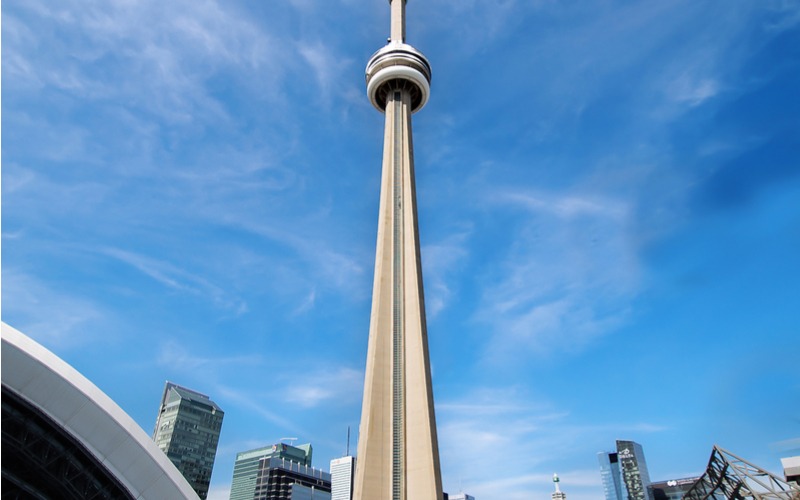
Canada is one of the most geographically diverse countries on the planet. From the jagged peaks of the Rockies to the tidal flats of the Bay of Fundy, from the northern lights dancing over the Northwest Territories to the rolling red dunes of Prince Edward Island, no two provinces feel quite alike. That variety is part of what makes this country so worth exploring.
Whether you’re planning a cross-country road trip, visiting a new province for the first time, or simply curious about what each region has to offer, this guide will walk you through the most iconic landmarks in every Canadian province and territory. Consider it your starting point for discovering what makes each corner of this country so remarkable.
The Provinces
British Columbia – Stanley Park, Vancouver
Stanley Park is one of the most beloved urban green spaces in North America. Sitting right at the edge of downtown Vancouver, this 400-hectare park offers seawall walks with sweeping views of the North Shore mountains, old-growth forest trails, totem poles, and the famous rose garden. It’s the kind of place that surprises first-time visitors, they don’t expect to find something that vast and that wild right next to a major city skyline.
Beyond the park itself, Vancouver’s surrounding landscape sets the tone for what British Columbia is all about: ocean on one side, mountains on the other, and some of the most dramatic scenery in the country in every direction. A visit here makes it easy to understand why so many Canadians choose to call this province home.
Alberta – Banff National Park
Canada’s first national park and one of its most iconic, Banff National Park sits in the heart of the Canadian Rockies and delivers exactly what you’d hope for: turquoise glacial lakes, soaring mountain peaks, wide open valleys, and wildlife encounters that remind you just how wild this country still is. Lake Louise alone, with its impossibly blue water and the Victoria Glacier looming above it, is worth the drive from anywhere.
Banff draws millions of visitors every year, and yet it manages to retain a sense of scale that keeps it from ever feeling crowded. Hikers, photographers, skiers, and wildlife enthusiasts all find something here. It’s one of those places that genuinely looks the same in person as it does in the photos.
Saskatchewan – Athabasca Sand Dunes
Saskatchewan doesn’t always top people’s lists of must-see provinces, but the Athabasca Sand Dunes have a way of changing that perspective fast. Located on the southern shore of Lake Athabasca in the province’s remote northwest, these are the most northerly active sand dunes in the world, stretching over 100 kilometres along the lakeshore and reaching heights of up to 30 metres in some places.
What makes this landmark particularly special is how dunes sit within a provincial wilderness park that’s only accessible by floatplane, which keeps visitor numbers low and the experience genuinely wild. Several plant species found here exist nowhere else on earth, thriving in the harsh conditions. If you’re looking for a Canadian landmark that most Canadians haven’t even seen, this is it.
Manitoba – Polar Bears in Churchill
Every autumn, something remarkable happens near the small town of Churchill on the western shore of Hudson Bay: polar bears gather and wait for the bay to freeze over so they can return to the sea ice and hunt seals. And for a few weeks each October and November, Churchill becomes the polar bear viewing capital of the world.
Visitors come from all over the globe for this, traveling by specialized tundra vehicles to get close to the bears without disturbing them. It’s one of the most extraordinary wildlife experiences available anywhere on earth, and it’s happening right here in Canada. Churchill also sits in one of the best spots in the country for viewing the northern lights, which is another reason to make the trip north.
Ontario – Niagara Falls
Niagara Falls is one of those landmarks where the scale doesn’t fully register until you’re standing in front of it. Approximately 168,000 cubic metres of water pour over the falls every minute during peak flow. The Horseshoe Falls on the Canadian side are wider and more dramatic than their American counterpart, which is a point of quiet pride for visitors who’ve seen both.
The surrounding region offers more than just the falls themselves. The Niagara Escarpment, the wine country of Niagara-on-the-Lake, and the historic old town all make this a destination worth more than a single afternoon. That said, standing at the edge of the Horseshoe Falls at dusk, watching the mist catch the last of the light, is the kind of moment that stays with you.
Quebec – Old Quebec City & Château Frontenac
There’s nowhere else in North America quite like Old Quebec City. The only walled city north of Mexico. Its cobblestone streets, fortified walls, and centuries-old architecture give it the feel of a European city that somehow ended up on the banks of the St. Lawrence River. Walking through the upper town, especially at night, when the stone buildings are lit up and the crowds thin out, is a genuinely beautiful experience.
At the heart of it all sits Château Frontenac, the grand railway hotel completed in 1893 that has become the most photographed hotel in the world. Even if you’re not staying there, it anchors every view of the city and serves as a reminder of the ambition and beauty that define Quebec’s cultural identity.
Newfoundland – Signal Hill, St. John’s
Signal Hill rises steeply above the harbour entrance of St. John’s and offers one of the most dramatic views in Atlantic Canada. The city sits below the harbour mouth, and the open Atlantic stretching out to the horizon. But the hill is more than a lookout, it’s a place where Guglielmo Marconi received the first transatlantic wireless signal in 1901, a moment that changed global communication forever.
The Cabot Tower at the summit is a well-preserved National Historic Site, and the walking trails along the headland give you a real feel for the rugged, windswept character of Newfoundland’s coastline. St. John’s itself is one of the most charming cities in the country to explore on foot.
New Brunswick – Bay of Fundy
The Bay of Fundy holds an unusual world record: the highest tidal range on earth. Twice a day, more than 160 billion tonnes of seawater flow in and out of the bay, creating tide changes of up to 16 metres, about the height of a four-story building. At low tide, you can walk on the ocean floor. Six hours later, the same spot is submerged in metres of water. The Hopewell Rocks, where massive flowerpot-shaped sea stacks rise from the bay floor, are the most famous spot to witness this firsthand.
The entire Fundy coastline is rich with wildlife as well. The bay is one of the most important feeding grounds in the world for migrating shorebirds, and whale watching tours run regularly from several ports along the shore. It’s an area that rewards slow, attentive travel.
Prince Edward Island – Green Gables Heritage Farm
Prince Edward Island is a small province with a big cultural footprint, and much of that is thanks to L.M. Montgomery’s Anne of Green Gables. The Green Gables Heritage Place in Cavendish draws visitors from around the world, many of them making a pilgrimage to a place they’ve known about since childhood.
The site itself is lovely: a restored heritage farmhouse surrounded by rolling farmland and the red-clay roads that Montgomery described so vividly in her writing. But PEI offers plenty beyond Anne. The island’s beaches are among the warmest north of the Carolinas, the seafood is world-class, and the gentle, pastoral landscape has a quiet beauty that sets it apart from every other Canadian province.
Nova Scotia – Peggy’s Cove
Peggy’s Cove is probably the most photographed fishing village in Canada. A small community perched on the granite outcroppings of St. Margaret’s Bay, it looks exactly like the idealized version of an Atlantic fishing village with colourful boats, a white lighthouse on the rocks, the ocean crashing below. The lighthouse was built in 1915 and is still in active use as a navigational aid, and has become the defining image of the place.
The village is best visited in the early morning before the tour buses arrive, when you can have the rocks and the views largely to yourself. The surrounding coastline is a reminder of why Nova Scotia (meaning ‘New Scotland’) was named by settlers who recognized a landscape that felt elemental and ancient in a way that matched the one they had left behind.
The Territories
Yukon – Klondike National Historic Sites, Dawson City
In the late 1890s, Dawson City was one of the most famous places on earth. The discovery of gold in the Klondike creeks sparked one of the largest gold rushes in history, flooding the remote Yukon valley with tens of thousands of prospectors, merchants, and adventurers. At its peak, Dawson City had a population larger than Vancouver. Today, it’s a small town of around 1,300 people, and the Klondike National Historic Sites preserve the story of what happened there.
Walking the boardwalks of Dawson City, visiting the original gold dredges still sitting in the creeks, and following the old Klondike Highway through the boreal wilderness gives you geographic and historical ambiance that’s hard to find anywhere else. The Yukon is also exceptional for wilderness hiking, river paddling, and winter activities, with Kluane National Park offering some amazing mountain scenery.
Northwest Territories – Aurora Borealis, Yellowknife
Yellowknife, the capital of the Northwest Territories, sits directly beneath one of the best auroral ovals on the planet. From late August through April, the aurora borealis appears here on roughly 240 nights per year. This makes it one of the premier destinations in the world for aurora viewing.
Seeing the northern lights for the first time is an unforgettable experience. Yellowknife has developed a strong tourism infrastructure around aurora viewing, with wilderness lodges, guided tours, and specialized photography packages that have helped establish the city as the aurora capital of North America.
Nunavut – Baffin Island
Baffin Island is the fifth-largest island in the world and one of the most remote and untouched landscapes on earth. Located in Canada’s eastern Arctic, it’s home to Auyuittuq National Park (whose name translates to ‘the land that never melts’) where massive granite peaks, glaciers, and Arctic tundra stretch for hundreds of kilometres in every direction. The dramatic fjords of the Sam Ford Fjord area are considered among the best big-wall climbing destinations on the planet.
For most visitors, the appeal of Baffin Island is its sheer, uncompromising wildness. Polar bears, narwhals, walrus, and Arctic wolves all live on the island. The Inuit communities that call it home have done so for thousands of years, and their deep connection to the land is part of the story the island tells.
Canada Is Worth the Journey
From the Pacific coast to the High Arctic, from the St. Lawrence Valley to the Klondike, Canada offers a breadth of experiences that takes a lifetime to fully appreciate. Every province and territory has something genuinely remarkable to offer.
If one of these destinations has inspired you to think about making a move, whether you’re relocating across the country or just to a neighbouring province, Great Canadian Van Lines has been helping Canadians move coast to coast for decades. Our team handles everything from local moves to full cross-country relocations, so you can focus on what’s waiting for you at the other end. Get a free estimate today and let us take care of the rest.


