



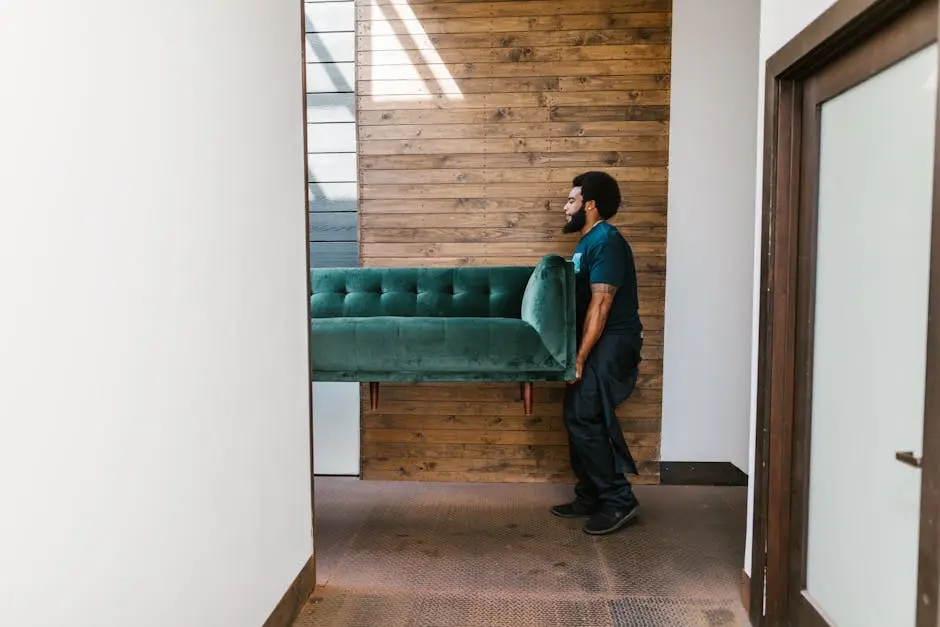
Moving large furniture is one of those tasks that looks straightforward until you are standing in your living room with a sofa that definitely does not fit through the door the way you thought it would. Whether you are moving a single piece across town or a full household across the country, transporting large furniture safely comes down to a handful of decisions made before anything gets lifted.
This guide covers everything: how to prepare large furniture for transport, what to disassemble and how, which vehicle or method makes sense for your situation, how to protect pieces from damage in transit, and how to load and unload without hurting yourself or the furniture.
Step 1: Measure Everything Before You Move Anything
The single most common reason large furniture gets damaged or stuck is failing to measure before the move starts. Do this before you disassemble a single screw or recruit a single friend.
Measure the furniture itself
Get the full dimensions of each large piece: height, width, and depth. For items like sofas and sectionals, also measure the diagonal height, which is the measurement taken from the bottom front corner to the top back corner. This is the dimension that determines whether a piece can tilt through a doorway or up a staircase.
Measure every route the furniture will travel
Walk the entire path from where the furniture is now to where it needs to end up. Measure every doorway (width and height), every hallway (width), every staircase (width and the height of any landing turns), and the elevator if there is one. Do this in both locations: where you are moving from and where you are moving to.
Pay particular attention to angles. A piece that fits through a doorway when carried straight may not fit when it needs to tilt around a corner. The rule of thumb is that a piece can typically navigate a 90-degree turn in a hallway if the furniture’s diagonal height is less than the hallway width plus the door width combined. When in doubt, test with a cardboard template cut to the furniture’s dimensions before attempting the real thing.
Step 2: Disassemble What You Can
Disassembling large furniture before transport is almost always worth the time it takes. Smaller pieces are easier to carry, less likely to get damaged, and much easier to navigate through tight spaces.
What to disassemble:
- Beds: Remove the headboard, footboard, and side rails from the frame. Most bed frames come apart with just an Allen key or a screwdriver. Disassembling a queen or king bed turns a multi-person lift into pieces two people can carry comfortably.
- Sofas and sectionals: Remove all detachable cushions and legs. Many sectionals separate into two or three pieces. Check underneath for bolts connecting the sections.
- Dining tables: Most dining tables have removable legs secured with bolts or a locking bracket. The tabletop on its own is much easier to carry and far less likely to scratch doorframes.
- Dressers and wardrobes: Remove drawers before moving the carcass. Empty drawers can be carried separately. Remove mirrors from dressers, they transport best on their own, wrapped separately.
- Shelving units and bookcases: Remove all shelves. Most simply lift out. Carry the carcass empty.
- Desks: If the desk has a return or hutch attached, detach it. Remove any drawers.
How to keep track of hardware
Put all screws, bolts, and small hardware into a zip-lock bag and tape it to the piece it belongs to, or label it clearly if you are moving multiple items. This sounds obvious but it is the step that gets skipped and regretted most consistently. Arriving at your destination without the right bolt for the bed frame at 10pm is avoidable.
Take a photo on your phone before you disassemble anything complex. Reassembly is significantly faster when you have a reference image of how things fit together.
Step 3: Protect the Furniture Before It Moves
The most common furniture damage during transport is not from a single impact but from surface contact: scratches from rubbing against doorframes, dents from being pressed against another piece in the truck, and moisture damage from condensation or rain. Wrapping everything properly before it leaves the room prevents most of this.
Moving blankets
Moving blankets are the workhorse of furniture protection. Drape them over wooden surfaces, upholstered pieces, and anything with a finish worth protecting. They absorb impact, prevent scratches from contact with other items, and cushion against bumps in the road. You can rent moving blankets from most truck rental companies or purchase them at hardware stores. Professional movers always show up with a full set.
Stretch wrap (plastic wrap)
Stretch wrap, the thick plastic film sold at moving supply stores, is used to hold moving blankets in place and to protect surfaces that should not be touched directly. Wrap it around blanketed furniture to keep the blanket secure during the carry and in the truck. Stretch wrap applied directly to upholstered surfaces (without a blanket underneath) can leave residue or damage fabric if left on for extended periods, so use it over the blanket rather than directly on fabric.
Bubble wrap and packing paper
Use bubble wrap for glass surfaces: tabletops, cabinet doors, mirror panels, and display shelves. Wrap glass in packing paper first, then bubble wrap, and secure with tape. Never put tape directly on a finished wood or glass surface. Corner protectors (foam or cardboard) are worth using on the exposed corners of wooden furniture, which are the most vulnerable point in a move.
Furniture sliders
Furniture sliders are flat discs that go under the legs of heavy pieces and allow you to glide them across hard floors without lifting. They work on hardwood, tile, and most smooth surfaces. Using them to move a heavy dresser or bookcase to the door before lifting it to carry downstairs saves significant effort and prevents floor damage.
Step 4: Choose the Right Transport Method
The right vehicle depends on what you are moving, how far, and how many pieces. Here is an honest breakdown of the main options.
Renting a moving truck
For a full room of furniture or anything that involves multiple large pieces, a rented moving truck is the most practical DIY option. Trucks come in sizes from 10 feet (suitable for a studio or one-bedroom) up to 26 feet (suitable for a large house). The back is purpose-built for furniture transport with a high ceiling, a loading ramp, and tie-down rails along the sides. Most truck rental companies provide moving blankets as an add-on.
The main considerations are whether you are comfortable driving a large vehicle, and whether the rental cost plus fuel plus time is competitive with what a mover would charge for the same job. For local moves, the math often favours renting. For long-distance moves, it gets more complicated.
Renting a cargo van or SUV
A cargo van or large SUV works for one or two larger pieces being transported locally. A cargo van typically fits a full mattress and box spring, a dining table with legs removed, or two to three pieces of flat-pack furniture. The loading height is lower than a truck, which makes getting heavy pieces in and out easier without a ramp.
Using a small car
Transporting large furniture in a small car is possible for select items, with the right preparation. Fold down the rear seats completely. Measure the resulting cargo area carefully, particularly the diagonal from the tailgate opening to the top of the front seat, which is the limiting dimension for long items. Most small cars can accommodate a single armchair, a small coffee table with legs removed, flat-pack boxes, or small disassembled items.
Always secure the load with straps or bungee cords to prevent shifting. If any part of the item extends past the tailgate or out a window, tie a high-visibility cloth to the protruding end. Check your province’s rules on overhanging loads: in most Canadian provinces, a load can overhang the rear of a vehicle by up to 1.5 metres if it is clearly marked. Never tie items to roof racks not rated for load-bearing use, and never attach straps to door frames or windows.
Roof racks and roof cargo carriers
Roof racks work for items that are flat, light, and compact when disassembled: bed frames, table surfaces, flat shelving. Use proper load-rated crossbars, not the decorative rails that come on many vehicles from the factory. Secure with ratchet straps running over and under the item, not just around it. Drive slowly, avoid highways if possible, and check the straps after the first few kilometres. The maximum roof load for most passenger vehicles is around 70 to 100 kg, check your vehicle’s manual.
Hiring professional movers
For large amounts of furniture, heavy specialty items like pianos and large safes, or any long-distance move, professional movers are the most practical option and often the most cost-effective when you factor in your time, the truck rental, fuel, and the risk of damage or injury. Professional movers have the equipment (dollies, straps, pads, loading ramps), the trained crew, and the cargo insurance to move large furniture properly.
For a cross-Canada or interprovincial move involving significant furniture volume, a registered Canadian Association of Movers (CAM) member company is the right call. They carry appropriate cargo insurance, follow professional handling standards, and have a formal process for resolving any damage claims.
| Method | Best For | Pros | Cons |
| Moving truck rental | Full room or multiple large items, local or regional | Large capacity, ramp included, purpose-built for furniture | Requires driving a large vehicle; fuel cost on long distances |
| Cargo van or large SUV | 1-3 pieces, local move | Lower loading height, easier to drive than a truck | Limited capacity; no ramp |
| Small car | Single small piece, locally from a store | No rental cost, immediate | Very limited capacity; requires careful securing |
| Professional movers | Large volume, heavy items, long distance | Trained crew, equipment, insurance, no physical effort from you | Higher cost than DIY on simple local moves |
Step 5: Load Safely and Strategically
How furniture is loaded into a vehicle determines both whether it gets damaged in transit and whether the people carrying it get hurt. Both outcomes are preventable with the right approach.
Lift with your legs, not your back
Bend at the knees, keep your back straight, grip firmly, and push up with your legs. This applies to every heavy lift regardless of experience level. Most moving injuries happen when people rush, which happens most when loading takes longer than expected. Budget more time than you think you need.
Use a dolly for anything that is too heavy to comfortably carry. Furniture dollies (flat platforms on wheels) and hand trucks (the upright L-shaped ones) are available at most hardware stores and moving supply companies. A dolly makes a 200-pound dresser a two-person job instead of a four-person one.
Load heaviest pieces first
In a truck or van, load the heaviest pieces first and position them against the front wall (the wall behind the cab). This keeps the weight low and toward the front of the vehicle, which improves handling. Tall items like wardrobes and refrigerators should be secured upright against the wall with straps.
Use the straps or tie-down rails
Every moving truck has tie-down rails along the sides for a reason. Use them. Run straps over large pieces and attach them to the rails on both sides to prevent shifting in transit. Furniture that shifts in the truck is furniture that gets damaged. A few minutes of strapping at the start prevents an hour of damage assessment at the end.
Fill gaps with soft items
Gaps between furniture pieces allow items to shift and knock against each other. Fill gaps with cushions, pillows, folded moving blankets, or boxes of soft items. This doubles as efficient use of space and protection for the furniture around it.
Protect floors and walls during loading
Put down old cardboard or moving blankets at the threshold of your home and at the back of the truck ramp to protect floors from the dragging and scraping that inevitably happens during loading. Check doorframe edges at both ends of the move. A piece of cardboard taped to a doorframe takes two seconds and prevents a gouge that takes considerably longer to repair.
Moving Specific Large Items: What to Know
Sofas and sectionals
Most standard three-seater sofas can be stood on end and tilted through a doorway. The key measurement is the sofa’s diagonal height (corner to corner). If this is less than the doorway’s height, it will fit when tilted. If not, the sofa may need to go through a window or may not move without disassembly. Some sofas have removable backs, check underneath for clips or bolts before assuming the piece cannot be reduced.
Mattresses
Mattresses should be transported in a mattress bag or mattress box to prevent tearing, staining, and moisture damage. Memory foam mattresses can be rolled or compressed for transport (and re-expand within a few hours at the destination) using compression bags, though this is not recommended for innerspring or hybrid mattresses. Always carry a mattress on its side, not flat, transporting a mattress flat in a truck or van exposes the surface to damage from other items placed on top of it.
Dressers and wardrobes
Remove all drawers before moving the carcass. A full dresser with drawers left in is significantly heavier and the drawers can slide out unexpectedly during a carry, causing injury. Tape the drawer slides shut or remove them entirely and transport them separately. Large wardrobes often need to be disassembled entirely, remove any shelves, hanging rails, and doors, then move the carcass in pieces.
Dining tables
For glass-top dining tables, remove and separately wrap the glass surface. Never transport a glass table top resting flat in a vehicle, it should be secured upright on edge, wrapped in moving blankets, and supported on both sides to prevent flexing. Tempered glass is more resilient than regular glass but can still crack from edge impacts or sustained flex.
Pianos
Pianos are not a DIY move. An upright piano weighs between 200 and 450 kilograms and has a high centre of gravity that makes it extremely dangerous to move without proper equipment and training. A baby grand starts at around 300 kilograms and requires disassembly of the legs, the music desk, and the lid before transport. Piano moving requires a specialized piano board, straps, and experienced movers who know how to navigate stairs and tight corners with the instrument. If you need to move a piano, hire professionals who specifically offer piano moving and have the right equipment for it.
Frequently Asked Questions
1. Can I fit a couch in a hatchback or SUV?
Possibly, if it is a loveseat or a sectional piece you can separate. Remove the legs and fold down all rear seats first. Measure the resulting cargo space carefully, particularly the diagonal measurement from the tailgate opening to the top of the front seat. A standard three-seater sofa will not fit in a passenger vehicle and will need a van or truck.
2. Is it legal to drive with a mattress sticking out of my trunk?
In most Canadian provinces, a load can overhang the rear of a vehicle by up to 1.5 metres if it is clearly marked with a high-visibility flag or cloth. Anything beyond that requires a wide load permit. Rules vary by province so check your local motor vehicle act for the specific limit where you are. Unsecured overhanging loads are ticketable offences in every province.
3. What tools do I need to disassemble furniture?
A basic toolkit covers most furniture: a Phillips and flat-head screwdriver, a set of Allen keys (hex keys) in various sizes, an adjustable wrench, and a rubber mallet for pieces that are friction-fit rather than bolted. Most flat-pack furniture from IKEA and similar retailers only requires the Allen key included with the original purchase.
4. Can I tie furniture to the roof of my car?
No. Tying furniture to the roof of a car without proper load-rated roof racks and crossbars is unsafe and almost certainly illegal. The smooth roof of a vehicle provides no anchor point for straps, and any furniture secured this way will shift in transit. Never attach straps or ropes to door frames, windows, or decorative roof trim.
5. Is it worth it to hire movers just for one item?
Hiring movers makes sense when the volume of furniture is significant, when you are moving long-distance, when any item is too heavy or awkward to safely move without professional equipment, or when the risk of injury or damage to an expensive piece outweighs the cost of a professional. A single-item move of a piano, large safe, or antique wardrobe almost always warrants a professional even if the rest of the move is DIY.
6. How do I get a large piece of furniture through a narrow doorway?
Remove the door from its hinges first, this gains you an extra 2 to 5 centimetres of clearance. For sofas, try the tilt method: stand the sofa on end and tilt it horizontally through the doorway. If the piece genuinely will not fit, it either needs to be disassembled further, removed via a window, or in rare cases, a doorframe may need to be temporarily removed by a carpenter. In apartment buildings, also check whether the service elevator is larger than the passenger elevator, it often is.
