



Key takeaways
- Defrost and dry your fridge at least 24 hours before moving day, with the doors propped open.
- Washing machines need transit bolts fitted, or the drum can be damaged in transit.
- Gas appliances should be disconnected by a licensed technician, not by you and not by your movers.
- Dishes go in on their edge, like records, not stacked flat.
- Movers cannot transport open food, propane or most cleaning chemicals.
The kitchen is usually the slowest room to pack, because almost everything in it is either fragile, heavy or both. Here is how to handle each part of it, starting with the appliances that need a head start.

Start with the fridge, 24 hours ahead
The fridge is the one appliance you cannot leave until moving day. It needs to be empty, defrosted and completely dry, which takes about a day.
- Empty it and use up or give away what is left. Food does not travel.
- Unplug it at least 24 hours before the move and prop the doors open so it defrosts and dries out.
- Put towels underneath. Defrosting fridges make more water than people expect.
- If it has an ice maker or water dispenser, shut off and disconnect the water line, then drain it.
- Tape the cord to the back and secure the doors for transit, but never seal a damp fridge shut. That is how you arrive to mould.
Fridges travel upright. If yours has to be tilted to get through a door, let it stand upright for several hours before plugging it back in so the compressor oil settles.
Washers, dryers and dishwashers
Washing machines need transit bolts, the brackets that hold the drum still while the machine is moved. If you kept the ones it came with, fit them. If not, your manufacturer can usually supply a set, and it is worth doing, because a loose drum can damage the machine on a long trip.
Before moving day, run the drain cycle, disconnect the hoses and let everything dry. The same goes for a dishwasher: disconnect, drain and dry, then pack the hoses with the machine.
Gas dryers and gas ranges are different. Those should be disconnected by a licensed technician. It is not a job for you or for your moving crew.
Small appliances
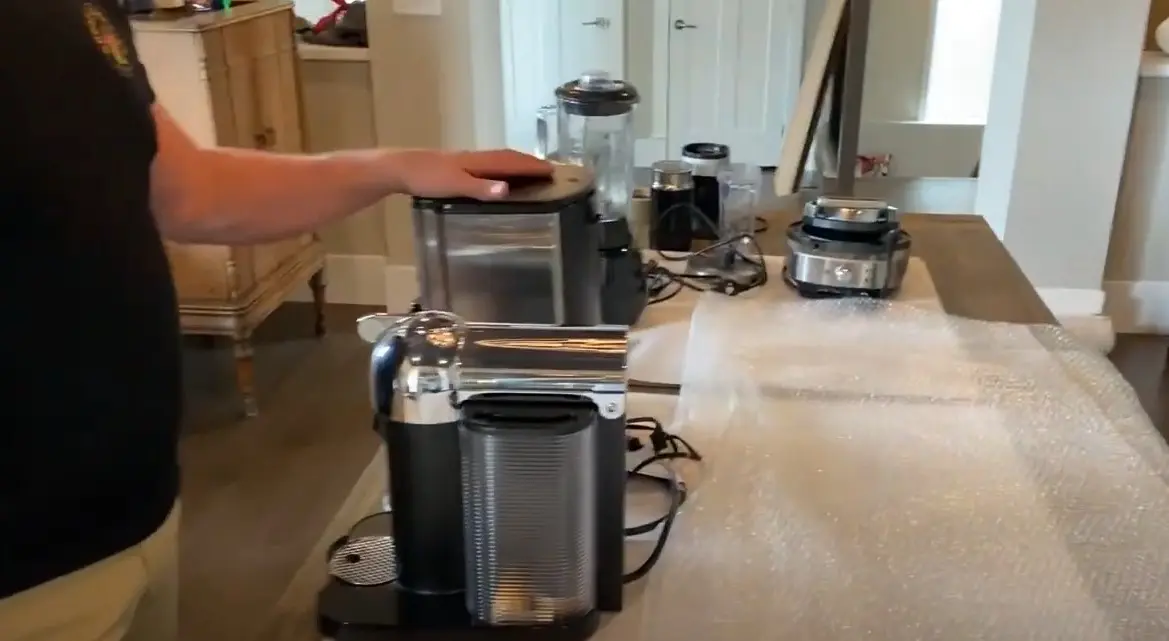
Kettles, toasters, blenders, stand mixers and coffee machines are easy as long as they go in clean and dry.
- Take off every removable part: blades, jugs, trays, carafes, baskets. Wrap those separately.
- Wrap the body in packing paper first, then bubble wrap, so there is no ink or tape contact with the finish.
- Use double-walled boxes for heavier items like a stand mixer, and fill the gaps so nothing rattles.
- Keep the cord with its appliance, taped or bagged, so you are not matching cords up later.
If you still have the original box for something expensive, like an espresso machine, use it.
Dishes, glasses and bowls
Dishes break when they rub against each other, so the goal is separation, not just padding.
- Pack plates on their edge, standing up like records in a crate, not stacked flat. Stacked plates crack under their own weight.
- Wrap each plate in paper, then wrap bundles of three or four together.
- Glasses and stemware go upright, each one wrapped, in a box with dividers. Dish pack boxes with cardboard cells are made for this.
- Pad the bottom and the top of every box with crumpled paper.
- Use small boxes. A big box of dishes is too heavy to lift safely and more likely to fail at the seams.
Use clean white packing paper rather than newspaper. Newsprint transfers onto dishes and you will be washing everything again at the other end.
What cannot go on the truck
Some kitchen items cannot legally travel on a moving truck. The usual list includes propane tanks and camping fuel, aerosols, most cleaning chemicals, and open or perishable food.
Plan to use these up, give them away or dispose of them before moving day. If you are not sure about something, ask your mover rather than packing it and hoping.
Labelling
Mark each box with the room, what is in it, and ‘fragile’ where it applies. Note on the label if an appliance has parts packed separately, so you are not hunting for the blender jug while standing in a new kitchen.
| Related reading How to Pack Electronics for a Move Packing Tips for Your Move |
| Rather not pack the kitchen yourself? It is the room most people hand over, and we do not blame them. Great Canadian Van Lines offers full and partial packing. Get a free estimate and we will talk through the options. Call 1-800-665-0055 or request a free estimate online. |
Check out our packing kitchen appliances video:
