



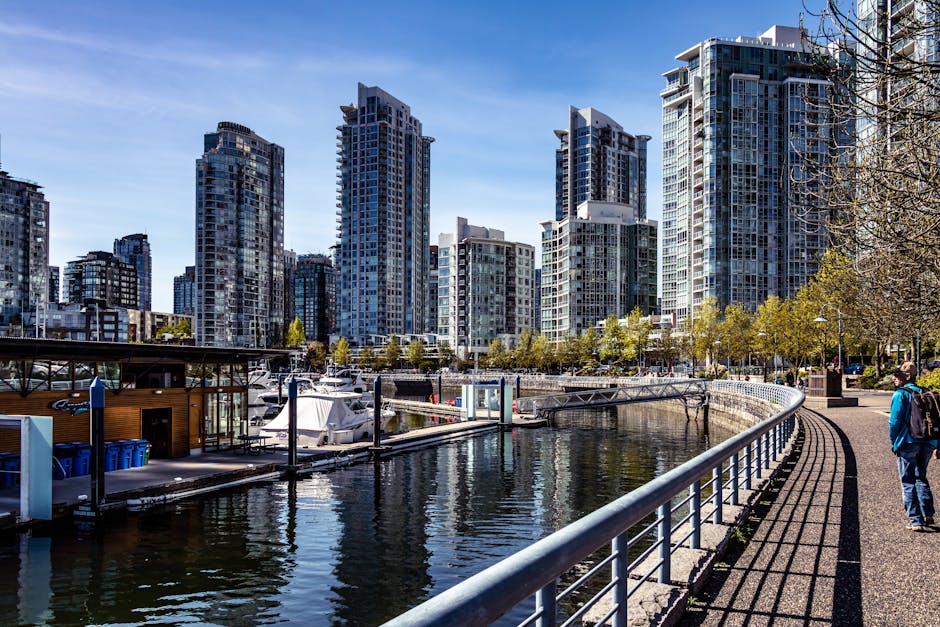
Vancouver is one of the most geographically compact major cities in Canada, yet it manages to pack an extraordinary variety of neighbourhood characters into its 115 square kilometres.
Whether you are moving to Vancouver for the first time, relocating within the city, or just trying to understand what all these neighbourhood names actually mean, this guide covers every major area.
How Vancouver Is Structured
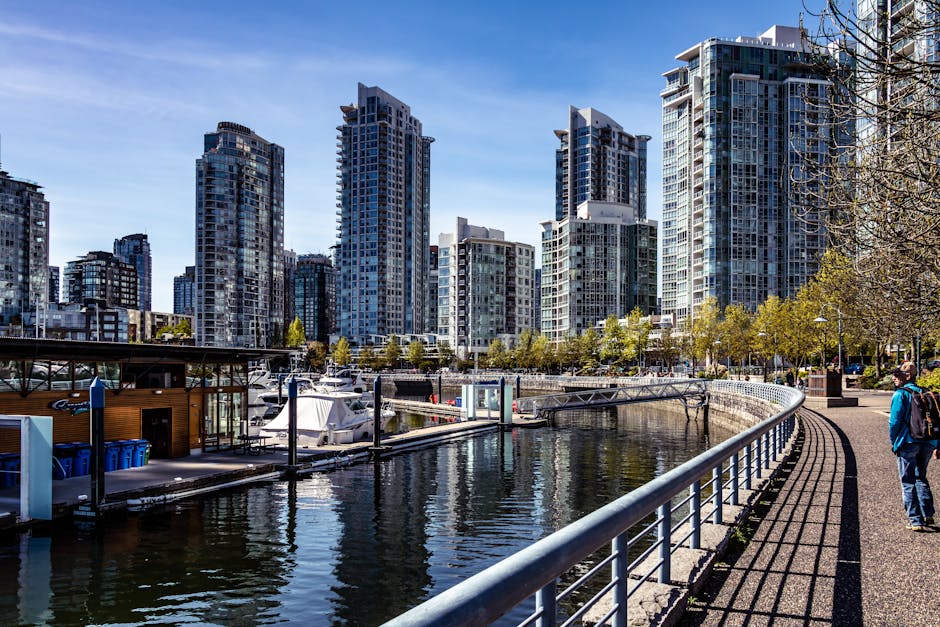
Vancouver sits at the southwestern tip of the Lower Mainland, bordered by Burrard Inlet to the north, the Fraser River to the south, the Strait of Georgia and English Bay to the west, and the City of Burnaby to the east. It is a narrow peninsula, which means very few neighbourhoods are far from water.
The city divides informally into the west side and the east side, split roughly by Ontario Street and then by Main Street as you go south. This divide is more than geographic. The west side has historically been wealthier, with larger single-family homes, more expensive real estate, and school catchments that attract families.
The east side has been more working-class, more diverse, more affordable, and by most accounts more culturally interesting. That gap has narrowed significantly over the past decade as east-side neighbourhoods like Mount Pleasant, Commercial Drive, and Main Street have gentrified substantially, but the character distinction persists.
The city is also divided into 22 official neighbourhoods by the City of Vancouver, though residents tend to use a mix of official neighbourhood names, informal names, and commercial district names interchangeably. This guide uses the names people actually use in conversation.
Downtown and the Inner Neighbourhoods
Downtown Vancouver
The downtown core is the densest part of the city and home to most of Vancouver’s major office towers, shopping districts, hotels, and cultural institutions. Robson Street is the main retail corridor. The waterfront along Burrard Inlet connects the Convention Centre, Canada Place, and the Coal Harbour marina. The Vancouver Art Gallery, the Queen Elizabeth Theatre, and the Orpheum anchor the cultural district around Granville and Georgia.
Rents here are the highest in the city. A one-bedroom apartment in the downtown core averages $2,800 to $3,200 per month in 2025. The payoff is unmatched walkability: most daily errands, restaurants, and entertainment are within a 10-minute walk. It suits professionals who value time over space.
West End
The West End is immediately west of Downtown and is one of the most densely populated neighbourhoods in Canada. Despite that density, it manages to feel like a genuine community rather than a commuter district. The character comes from its mix: heritage apartment buildings from the 1950s and 60s, tree-lined streets, Stanley Park at its western edge, English Bay beach at its southern end, and the Davie Village LGBTQ+ district cutting through its middle.
Residents here are disproportionately long-term. People move to the West End and stay. Rents run $2,400 to $2,900 for a one-bedroom, lower than Downtown proper but still among the most expensive in Vancouver. The trade-off is a walkable, beach-adjacent, community-oriented lifestyle that is genuinely hard to find in a city-centre neighbourhood anywhere else in Canada.
Yaletown
Yaletown occupies the former industrial warehouse district between Downtown and False Creek. The conversion of brick warehouses into lofts, restaurants, and boutiques beginning in the 1990s created one of Vancouver’s most visually distinctive neighbourhoods.
It attracts young professionals and design-oriented residents who want urban density with a more polished aesthetic than Gastown. The Roundhouse Community Arts and Recreation Centre, built inside a restored locomotive roundhouse, gives the neighbourhood a genuine civic anchor. One-bedroom rents average $2,600 to $3,100 per month.
Gastown
Gastown is Vancouver’s oldest neighbourhood. The Steam Clock, Water Street’s cobblestones, and the heritage brick buildings draw tourists, but the neighbourhood has real residential life too. Independent boutiques, some of Vancouver’s best restaurants, and a creative and tech industry presence give it an identity beyond its heritage aesthetics.
The neighbourhood sits directly adjacent to the Downtown Eastside, Vancouver’s most concentrated area of poverty and addiction, which creates a complicated dynamic. Gastown is gentrifying but has not fully arrived. That ongoing tension is part of what keeps, by Vancouver’s standards, it relatively affordable. One-bedroom rents run $2,400 to $2,800 per month.
The Westside Neighbourhoods
Kitsilano
Kitsilano is the most iconic neighbourhood on Vancouver’s west side and one of the most recognized in the city. Kits Beach is the summer social centre for the entire city: volleyball nets, families, paddleboards, the outdoor Kitsilano Pool (one of the longest saltwater pools in North America), and mountain views across Burrard Inlet.
The 4th Avenue commercial strip runs through the neighbourhood with a mix of health food stores, surf and outdoor shops, cafes, and restaurants. Kitsilano was the counterculture centre of Vancouver in the 1960s and 70s and is now firmly upper-middle-class. One-bedroom rents average $2,400 to $2,900. Detached homes are well over $2 million in most of the neighbourhood.
Point Grey
Point Grey occupies the western tip of the Vancouver peninsula, home to some of the largest and most expensive residential properties in Canada. Wreck Beach, the only clothing-optional beach in the Lower Mainland, sits at the base of the cliffs below UBC. Pacific Spirit Regional Park provides 763 hectares of urban forest trails on the edge of the neighbourhood.
The residential streets between UBC and Kitsilano are exclusively detached homes, very quiet, and very expensive: $2.5 million to $5 million or more for a single-family home is the norm. It is a neighbourhood shaped by the university’s presence, with strong schools, a highly educated resident population, and a character that is more academic-suburban than urban-vibrant.
South Granville
South Granville occupies the stretch of Granville Street between 7th and 16th Avenue, one of Vancouver’s longstanding gallery and antique districts. High-end interior design stores, contemporary art galleries, the Stanley Industrial Alliance Stage theatre, and some of Vancouver’s better restaurants define the street. Quiet residential blocks extend on either side.
It is a neighbourhood that has avoided the pressures of rapid change better than most and retains a dignified, arts-oriented character. Rents run $2,400 to $2,900 for a one-bedroom. It tends to attract people who care about aesthetics and want proximity to arts without the Yaletown price premium.
Kerrisdale
Kerrisdale is Vancouver’s most village-like west-side neighbourhood. The commercial strip along West 41st Avenue has independent shops, cafes, and restaurants that have been there for decades alongside newer additions. The pace is noticeably slower than most of Vancouver. Large homes, well-maintained gardens, and mature tree canopy give it a settled, almost provincial elegance.
It is primarily a neighbourhood of established families and retirees. Detached homes run $2.5 million to $4 million or more. The Kerrisdale Arena is a community anchor. Strong school catchments and a genuine village atmosphere make it consistently desirable for families who prioritize neighbourhood character over urban convenience.
Dunbar
Dunbar is a classic west-side family neighbourhood running along a long commercial strip on Dunbar Street. The street has independent businesses that give it a village character. Residential streets on either side are quiet and predominantly single-family homes.
It is one of the less transit-accessible west-side neighbourhoods, which keeps car ownership fairly essential. Detached homes run $2 million to $3.5 million. Strong school catchments and very low density make it a consistent destination for families who want quiet streets and a neighbourhood that genuinely knows itself.
The East Side Neighbourhoods
Mount Pleasant
Mount Pleasant is the neighbourhood that best captures the current tension in Vancouver between affordability, gentrification, and community identity. The Main Street corridor between Broadway and King Edward has become one of the most compelling commercial streets in the city: craft breweries, independent coffee roasters, bookstores, restaurants, and galleries occupying a mix of heritage buildings and new construction.
The northern end of the neighbourhood, between Broadway and 2nd Avenue, has become a tech and creative industry hub with significant office development alongside new residential towers. Heritage single-family homes on the side streets still exist but are increasingly expensive. One-bedroom rents average $2,200 to $2,600. It is the neighbourhood most likely to feel 10 years younger and 20 percent cheaper than an equivalent west-side address.
Commercial Drive (Grandview-Woodland)
Commercial Drive, or simply ‘The Drive,’ is the cultural and community heart of East Vancouver and one of the most genuinely interesting streets in the city. The neighbourhood has Italian roots from early 20th century immigration and has accumulated Latin American, South Asian, East African, and Portuguese communities since.
The result is a street that has an authentic diversity most Vancouver neighbourhoods cannot match: Italian cafes next to Salvadoran restaurants next to Ethiopian coffee houses next to independent record shops.
The Grandview-Woodland Saturday farmers market, the Rio Theatre, and community gardens are neighbourhood anchors. It remains one of Vancouver’s more affordable accessible neighbourhoods: one-bedroom rents average $2,100 to $2,500. It is the neighbourhood that people who move away from Vancouver miss most.
Fairview
Fairview sits between False Creek and the Broadway corridor and functions as a practical, well-located residential neighbourhood without strong independent character of its own. Primarily low-rise and mid-rise apartments and condos. Vancouver General Hospital is in the neighbourhood, making it a natural base for healthcare workers. The Broadway-City Hall SkyTrain station gives excellent transit access.
It is a sensible choice for anyone who wants central Vancouver at a price slightly below the waterfront neighbourhoods. One-bedroom rents average $2,300 to $2,700. Quiet, well-maintained, and conveniently located without being particularly exciting.
Riley Park and Little Mountain
Riley Park and Little Mountain form a mid-city neighbourhood anchored by Queen Elizabeth Park, one of Vancouver’s best-maintained formal gardens with views across the city to the North Shore mountains. The Hillcrest Community Centre, one of the best-equipped in the city, is a neighbourhood anchor. Main Street runs through the eastern side.
The neighbourhood has a genuine community feel that can be harder to find in Vancouver’s more transient areas. A mix of long-term residents and newer arrivals, single-family homes and newer condos, independent businesses along Main Street and commercial convenience on Cambie. One-bedroom rents average $2,000 to $2,400. A strong value proposition for anyone who wants community infrastructure and green space within reasonable commuting distance of downtown.
Kensington-Cedar Cottage
Kensington-Cedar Cottage is a solid east-side family neighbourhood that lacks the profile of Commercial Drive or Mount Pleasant but delivers on the fundamentals: good parks including China Creek North, a mix of housing types, the Kingsway commercial corridor with genuine neighbourhood diversity, and more affordable rents than west-side equivalents.
One-bedroom rents average $1,900 to $2,300. It is the kind of neighbourhood that long-term Vancouver residents know well and outsiders tend to overlook, which keeps it accessible and community-oriented in ways that more fashionable areas no longer are.
South Vancouver Neighbourhoods
Oakridge
Oakridge is centrally located and in the middle of a major transformation. The Oakridge Centre mall redevelopment is one of the largest urban redevelopment projects in Vancouver’s history, replacing an aging suburban mall with a mixed-use neighbourhood of residential towers, retail, parks, and office space. The neighbourhood around it is in transition as a result.
Canada Line SkyTrain access makes it one of the best-connected south Vancouver neighbourhoods for commuters. One-bedroom rents average $2,200 to $2,600. It is a practical choice now and likely a more compelling one as the redevelopment matures over the next several years.
Kerrisdale, Marpole, and South Vancouver
South of 49th Avenue, Vancouver becomes more affordable and more residential. Marpole has Canada Line access via Marine Drive and is seeing significant new development along Granville Street. One-bedroom rents average $1,900 to $2,300, among the most accessible in the city. The neighbourhood has real diversity and a practical, unpretentious character.
South Vancouver broadly encompasses the large residential area between Cambie and Knight Street south of 49th. It is the most affordable part of the city within Vancouver’s limits, primarily single-family homes and older lowrise apartments, predominantly South Asian and Chinese communities, and easy access to Richmond via Cambie or Knight Street. One-bedroom rents average $1,800 to $2,200.
Quick Comparison: Vancouver Neighbourhoods at a Glance
| Neighbourhood | 1-Bed Rent Range | Best For | Transit Access |
| Downtown | $2,800–$3,200 | Young professionals, no-car lifestyle | Excellent (multiple lines) |
| West End | $2,400–$2,900 | Community feel, beach access | Very good (buses, walkable) |
| Yaletown | $2,600–$3,100 | Design-oriented professionals | Excellent (Canada Line) |
| Kitsilano | $2,400–$2,900 | Beach lovers, active lifestyle | Good (buses to downtown) |
| Mount Pleasant | $2,200–$2,600 | Creative, tech workers, young families | Good (Broadway Skytrain soon) |
| Commercial Drive | $2,100–$2,500 | Culture seekers, community-oriented | Good (bus, Millennium Line) |
| Gastown | $2,400–$2,800 | Creative industries, urban character | Excellent (walkable Downtown) |
| Fairview | $2,300–$2,700 | Healthcare workers, practical families | Excellent (Canada Line) |
| Riley Park | $2,000–$2,400 | Community, parks, families | Good (buses, Canada Line nearby) |
| Kerrisdale | $2.5M–$4M (owned) | Established families, retirees | Moderate (bus dependent) |
| Oakridge | $2,200–$2,600 | Commuters, practical renters | Excellent (Canada Line) |
| Marpole | $1,900–$2,300 | Value seekers, young renters | Good (Canada Line, buses) |
| South Vancouver | $1,800–$2,200 | Families, most affordable option | Moderate (bus dependent) |
How to Choose the Right Vancouver Neighbourhood
Vancouver’s neighbourhoods are genuinely different from each other in ways that matter to daily life. Here are the questions worth thinking through before you commit:
- How do you plan to commute? If you do not own a car, transit quality matters enormously. The Canada Line (Cambie corridor to YVR) and the Millennium and Expo Lines (east side and Surrey) are the workhorses. Kitsilano, Dunbar, and Kerrisdale are bus-dependent and can feel isolating without a car. Everything on a SkyTrain line is significantly more practical for car-free living.
- Do you have or plan to have children? School catchments in Vancouver are specific to address and matter significantly for elementary schools. West-side catchments (Point Grey Secondary, Kitsilano Secondary, Prince of Wales Secondary) have historically been perceived as stronger, though east-side schools have improved considerably. Research specific catchments rather than neighbourhoods generally.
- What is your budget honestly? West-side rental prices are consistently 15 to 25 percent higher than east-side equivalents for comparable units. Buying on the west side requires significantly more capital. If your budget is a genuine constraint, the east side and south Vancouver deliver more space for the money, often in more interesting neighbourhoods.
- What kind of neighbourhood energy do you want? Dense, walkable, and urban: Downtown, West End, Yaletown. Active and beach-adjacent: Kitsilano, West End. Creative and community-driven: Commercial Drive, Mount Pleasant. Quiet and family-oriented: Dunbar, Kerrisdale, Riley Park. Affordable and diverse: Renfrew, Kensington, South Vancouver.
- Are you moving from another city? If you are arriving from Toronto, you will find Vancouver’s east-west character divide interesting but navigable. If you are arriving from a smaller Canadian city, Downtown and Yaletown can feel alienating initially while east-side neighbourhoods like Commercial Drive or Mount Pleasant tend to absorb newcomers more naturally.
A Note on Vancouver’s Real Estate Market
Vancouver consistently ranks as one of the least affordable housing markets in the world relative to local incomes. The benchmark price for a detached home in the City of Vancouver exceeded $2 million in 2024. Condominiums, the entry point for most buyers, benchmark around $780,000 to $850,000 depending on location and unit size.
The rental market is tight across the city, with vacancy rates historically below 2 percent. Purpose-built rental buildings have increased in supply following policy changes, but rents remain high. Anyone moving to Vancouver should budget for rental costs meaningfully above Canadian averages and should expect competition for desirable units in most neighbourhoods.
The west side versus east side price gap is real at the ownership level but smaller in the rental market. A one-bedroom in Kitsilano and a comparable one-bedroom in Mount Pleasant might be separated by only $200 to $300 per month, while the equivalent owned properties might differ by several hundred thousand dollars.
Finding your perfect neighborhood in Vancouver
Finding the perfect neighborhood in Vancouver comes down to matching your lifestyle with the unique offerings of each area. Whether you prefer the bustling streets of Downtown, the artsy vibe of Commercial Drive, or the peaceful atmosphere of Dunbar, there’s a spot in Vancouver that feels just right.
Remember, each neighbourhood has its own personality, some are great for families seeking good schools and parks, while others cater to young professionals or retirees looking for a quieter pace. Take the time to visit and get a feel for the different places. Consider your needs, budget, and what you want in a community. Vancouver is diverse, and with a little research and exploration, you’ll find the neighborhood that feels like home.
