



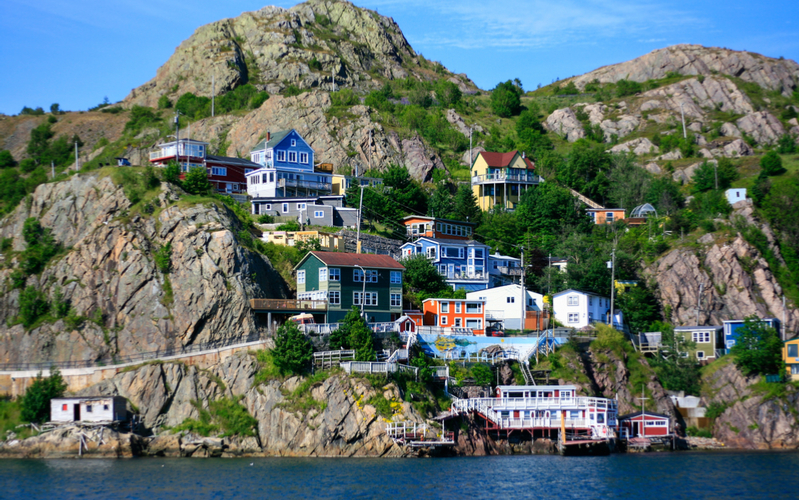
Canada’s east coast is one of the most historically rich, scenically dramatic, and culturally distinct parts of the country. It is where European settlers first came ashore over a thousand years ago, where Canada’s confederation story began, and home of some of the most iconic landscapes in the country.
Whether you are planning a visit, researching a potential move, or simply trying to understand what and where Canada’s east coast actually is, this guide covers the geography, the ocean, the weather, and the cities worth knowing, for travellers and those considering making the move.
Where Is the East Coast of Canada?
Canada’s east coast refers to the Atlantic coastal region of the country, encompassing the four Atlantic provinces: Nova Scotia, New Brunswick, Prince Edward Island, and Newfoundland and Labrador.
These provinces form the easternmost part of Canada’s settled landmass, with coastlines facing the Atlantic Ocean, the Gulf of St. Lawrence, and the Bay of Fundy.
The region is sometimes called Atlantic Canada or the Maritimes, though technically the term ‘Maritimes’ refers only to the three mainland Atlantic provinces (Nova Scotia, New Brunswick, and Prince Edward Island), while Newfoundland and Labrador is its own distinct entity. Together, the four provinces cover approximately 540,000 square kilometres and are home to around 2.5 million people.
Geographically, the east coast sits within what geologists call the Appalachian Highlands, the eastern extension of the ancient Appalachian mountain range that runs from the northeastern United States up through Atlantic Canada.
The landscape is characterized by low, rounded hills, rocky shorelines, deeply indented bays and inlets, and pockets of fertile valley land. It is the oldest settled part of Canada, and that age shows in everything from the architecture to the road networks to the centuries of maritime industry that shaped the region’s economy and identity.
| Province | Capital City | Approx. Population | Key Feature |
| Nova Scotia | Halifax | ~1.07 million | Largest Atlantic province by population; Halifax is the regional hub |
| New Brunswick | Fredericton | ~900,000 | Only officially bilingual province; borders Quebec and Maine |
| Prince Edward Island | Charlottetown | ~175,000 | Smallest province; known for red soil, beaches, and Anne of Green Gables |
| Newfoundland and Labrador | St. John’s | ~530,000 | Easternmost point in North America; distinct culture and dialect |
What Ocean Is on the East Coast of Canada?
The primary body of water bordering Canada’s east coast is the Atlantic Ocean. More specifically, the Atlantic provinces are bordered by or adjacent to several distinct bodies of water that together define the maritime character of the region.
The Atlantic Ocean forms the eastern and southern boundary of the region, with the open North Atlantic touching the coasts of Nova Scotia, the eastern shore of Newfoundland, and the coast of Labrador.
The Labrador Sea (a marginal sea of the North Atlantic) lies off the northeastern coast of Labrador and the northern coast of Newfoundland, and is the route through which icebergs drift southward from the Arctic each spring. AND the same waters that the Titanic encountered in 1912!
Weather on the East Coast of Canada
The east coast of Canada has a maritime climate shaped primarily by its proximity to the Atlantic Ocean. This means the region experiences less extreme temperatures than Canada’s interior. The Atlantic moderates the worst of both extremes.
That said, ‘moderate’ is relative in Canada, and the east coast’s weather still has real character. Fog, wind, and precipitation are defining features of coastal life. Storms rolling up from the eastern seaboard can be powerful. And Newfoundland in particular has earned its reputation as one of the foggiest, windiest, and most dramatically weathered places in the country.
Season by Season
Spring (March – May)
Spring arrives slowly on the east coast. March is still firmly winter in most of the region, with snow lingering and cold air keeping temperatures well below comfortable.
April begins the thaw, with coastal areas warming faster than the interior. The cold Labrador Current keeps the ocean cold until well into May, so sea fog is common along exposed coastlines in late spring.
By late May, temperatures are genuinely warming and the landscape is greening up, but it is still not reliable beach weather.
Summer (June – August)
East coast summers are warm, pleasant, and genuinely beautiful — but shorter than most people from central Canada expect. Daytime highs typically reach 22 to 27 degrees Celsius in July and August, with the PEI and New Brunswick coastlines along the Gulf of St. Lawrence experiencing the warmest beach conditions.
Ocean temperatures in the Gulf can reach 20 to 22 degrees by August, warm enough for swimming. The Atlantic-facing shores of Nova Scotia and Newfoundland run cooler.
Summer is when the east coast is at its most visited, its festivals are in full swing, and the long northern evenings make every day feel longer than it actually is.
Fall (September – November)
Fall is arguably the east coast’s best season. September holds much of summer’s warmth with cooler evenings and brilliant foliage. October delivers the kind of colour display that draws visitors from across the country.
Hurricane season technically extends through October, and storm remnants from the Gulf Coast do occasionally reach the Maritimes, but most years, fall weather is spectacular rather than severe. November is the transition back toward winter: grey, wet, and cooling fast.
Winter (December – March)
East coast winters are genuinely cold, snowy, and in the case of Newfoundland and the higher-elevation parts of New Brunswick, quite severe.
Halifax typically receives 150 to 200 centimetres of snow over a winter season. St. John’s is one of the snowiest cities in Canada, averaging over 300 centimetres annually, and is also one of the windiest.
That said, coastal positions mean temperatures rarely fall to the extreme lows seen in Ottawa or the Prairies. The east coast also gets Atlantic storms and freezing rain events that aren’t present in other Canadian climates.
| City | Avg. July High | Avg. Jan Low | Annual Snow | Annual Rain |
| Halifax, NS | 23°C | -8°C | ~170 cm | ~1,270 mm |
| Fredericton, NB | 26°C | -15°C | ~290 cm | ~1,090 mm |
| Charlottetown, PEI | 24°C | -11°C | ~310 cm | ~1,070 mm |
| Moncton, NB | 25°C | -13°C | ~330 cm | ~1,050 mm |
| St. John’s, NL | 20°C | -7°C | ~320 cm | ~1,490 mm |
| Saint John, NB | 22°C | -10°C | ~155 cm | ~1,340 mm |
Best Places to Visit on the East Coast of Canada
The east coast’s appeal to visitors is built around a combination of history, coastline, food, and a distinctly unhurried pace of life. It rewards slow travel more than almost anywhere else in the country. With that said, here are the destinations that earn their place on every serious east coast itinerary.
Halifax, Nova Scotia

Halifax is the largest city on the east coast and the natural starting point for any Atlantic Canada trip. It has the energy and infrastructure of a proper city with great restaurants, a vibrant waterfront, multiple museums, a thriving live music scene, without the sprawl and impersonality of a major urban centre.
The Halifax waterfront is genuinely one of the best in the country for an afternoon or evening: the Historic Properties, the ferry to Dartmouth, the boardwalk, the pubs, and the view of the harbour working in every direction at once.
Pier 21, now a National Museum of Immigration, sits on the Halifax waterfront and serves as one of Canada’s most emotionally significant historic sites. The Citadel, the Halifax Public Gardens, and the North End food and arts scene round out a city that genuinely rewards two or three days of exploration.
Peggy’s Cove, Nova Scotia

Peggy’s Cove is one of the most photographed places in Canada, and in person it lives up to the photographs. The small fishing village perched on the granite outcroppings of St. Margaret’s Bay is a 45-minute drive from Halifax and belongs on any Nova Scotia itinerary.
Visit early morning before tour groups arrive if you want the rocks largely to yourself. The village has remained small by design, and the surrounding coastline gives a genuine sense of the rugged, elemental character of the Nova Scotia shore.
Bay of Fundy, New Brunswick

The Bay of Fundy is the kind of natural phenomenon that earns its reputation. The Hopewell Rocks (massive flowerpot-shaped sea stacks that rise from the ocean floor, exposed at low tide and submerged at high) are the signature attraction, but the entire bay corridor rewards exploration.
Twice a day, more than 160 billion tonnes of seawater flow in and out, creating tidal changes of up to 16 metres. Walking on the ocean floor at low tide and returning six hours later to find it submerged in metres of water is quite a cool experience.
Charlottetown, Prince Edward Island
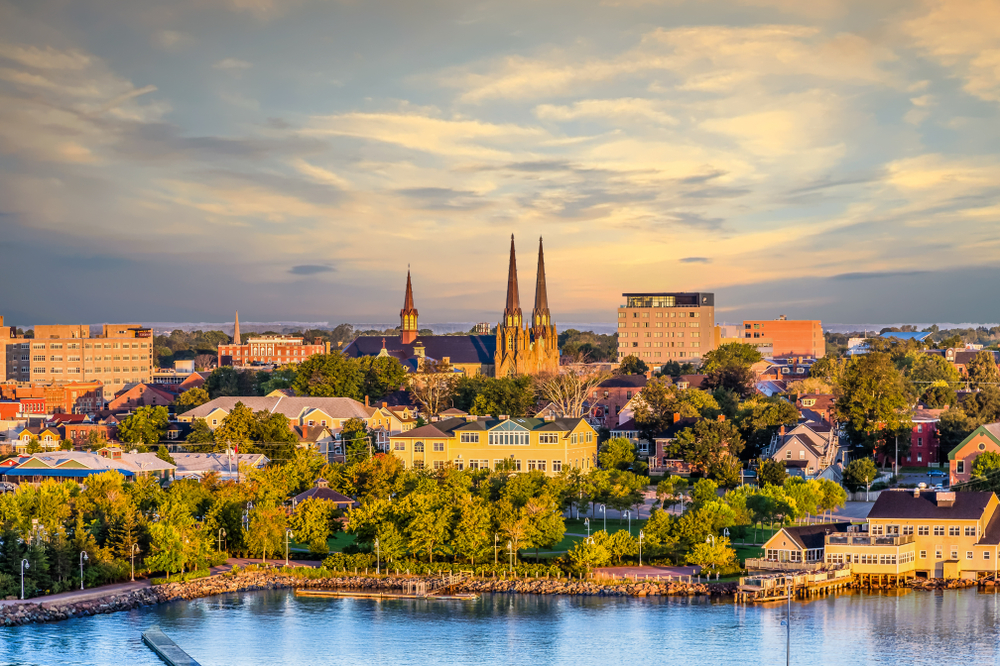
Charlottetown is the birthplace of Canadian Confederation. The downtown is compact, charming, and walkable, with Victorian architecture, excellent seafood restaurants, and a theatre scene that is disproportionately strong for a city of 40,000 people.
The Confederation Centre of the Arts runs an acclaimed production of Anne of Green Gables each summer that has been drawing visitors for decades. The surrounding island makes Charlottetown an ideal base for exploring PEI as a whole.
Cavendish, Prince Edward Island
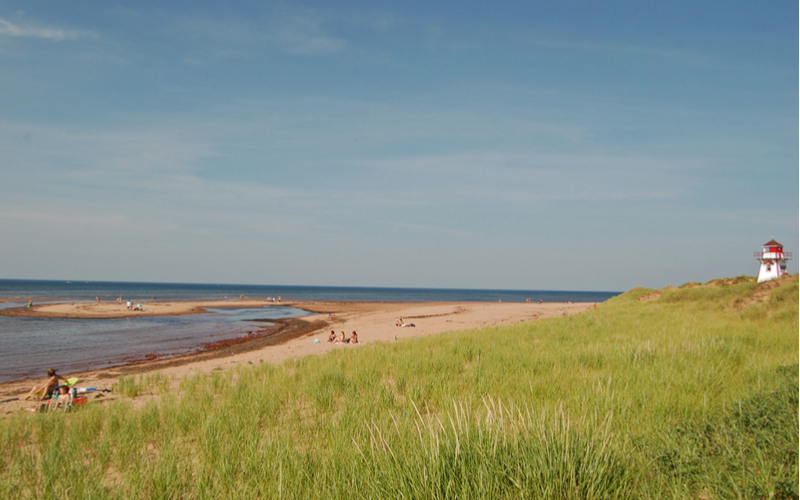
Cavendish is PEI’s primary beach destination and also the home of Green Gables Heritage Place, the restored farmhouse that inspired L.M. Montgomery’s Anne of Green Gables.
The beaches around Cavendish (particularly those in Prince Edward Island National Park) are among the best in Atlantic Canada. The area draws visitors who have been devoted to Anne of Green Gables since childhood, as well as families who simply want one of the warmest, most accessible beach experiences in eastern Canada.
Saint John, New Brunswick
Saint John is a city that initially looks very industrial with its harbour-city exterior. The Uptown area has real character: a walkable concentration of Victorian architecture, independent restaurants, a farmers’ market that has been operating continuously since 1785.
The Reversing Falls, where the Bay of Fundy tides are so powerful they force the Saint John River to reverse its flow, is one of New Brunswick’s most compelling natural attractions, right at the edge of the city.
Fundy Isles, New Brunswick
The islands of the outer Bay of Fundy (Campobello, Grand Manan, and Deer Island) offer a version of east coast travel that feels remote without requiring a ton of logistical effort.
Campobello Island is home to the Roosevelt International Park, the summer estate of Franklin D. Roosevelt and a compelling piece of Canada-US history. Grand Manan has rugged cliffs, smoked herring operations that have run for generations, whale watching that is among the best on the east coast, and the kind of quiet that only comes with true island life.
St. John’s, Newfoundland
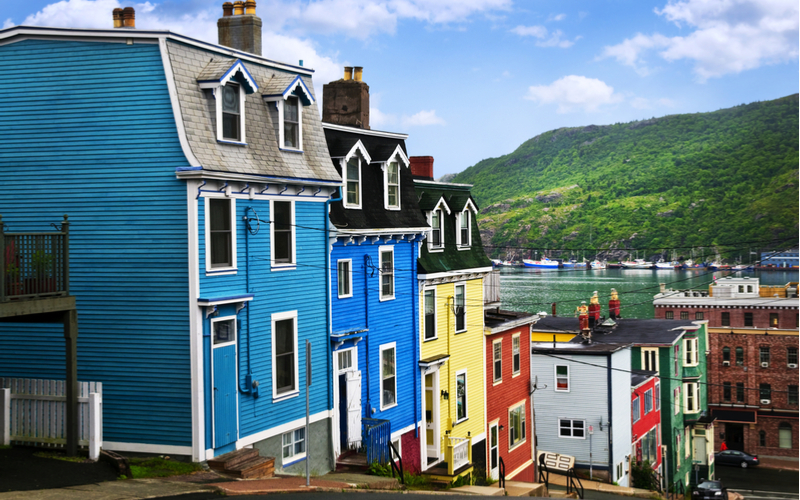
St. John’s is unlike anywhere else in Canada. The city sits at the eastern tip of North America, faces the North Atlantic directly, and has the personality to match: wind-battered, colourful, historically layered, intensely proud, and genuinely funny in a way that its residents will tell you is a defining provincial trait.
Jellybean Row holds the blocks of brightly painted Victorian row houses that cascade down Signal Hill toward the harbour and has become one of the most recognizable urban images in the country.
The George Street bar district has more licensed premises per square foot than anywhere in North America. The Signal Hill National Historic Site, where Marconi received the first transatlantic wireless signal in 1901, overlooks the harbour and the open ocean. And Cape St. Mary’s, a two-hour drive south, hosts one of the largest Northern Gannet colonies in the world on a sea stack you can approach to within metres.
Best Places to Live on the East Coast of Canada
The east coast has seen significant interprovincial migration in recent years, driven by remote work enabling people to leave expensive central Canadian cities for more affordable Atlantic communities without sacrificing income.
Halifax in particular has grown faster than almost any Canadian city over the past five years. Here is an honest look at what the main east coast cities are like to actually live in, with current housing figures included.
Halifax, Nova Scotia – The Regional Hub
Halifax is the east coast’s most complete city for livability. It offers the services, employment, cultural life, and urban infrastructure of a proper mid-sized city while remaining dramatically more affordable than Toronto or Vancouver.
The job market is anchored by government, defence, post-secondary education (Dalhousie, Saint Mary’s, and others), tech, and healthcare. The city has attracted significant interprovincial migration from Ontario, which has driven both rent and home prices up substantially over the past five years. But even at current prices, it remains one of Canada’s more accessible cities.
| Population | ~500,000 (Halifax CMA, 2024) |
| Avg. Home Price | ~$579,606 (2024, NSAR) |
| Avg. 1-Bed Rent | ~$1,636–$1,773/month (2024-2025, CMHC/Apartments.ca) |
| Transit Pass | $90/month (Halifax Transit) |
| Best For | Young professionals, students, families, remote workers seeking east coast lifestyle |
| Key Consideration | Rent has risen significantly (6-7%/yr recently); doctor shortage (10,000+ on wait list for family physician in 2025) |
Moncton, New Brunswick – The Hub City
Moncton punches above its weight for a city of 140,000. It is the fastest-growing city in New Brunswick, strategically positioned as the commercial hub of the Maritimes with road, rail, and air connections to the whole region.
It is bilingual (French & English) and home to the Universite de Moncton, the largest French-language university outside Quebec.
Housing remains genuinely affordable by Canadian standards. The city is not the most scenic place to live on the east coast, but it is practical, growing, and underrated as a place that offers a real quality of life at a price point that most other Canadian cities can no longer match.
| Population | ~175,000 (Moncton CMA, 2024) |
| Avg. Home Price | ~$350,000–$400,000 (benchmark, 2024-2025) |
| Avg. 1-Bed Rent | ~$1,400–$1,600/month (2025 estimates) |
| Best For | Affordability, bilingual environment, central Maritime location |
| Key Consideration | Winters are cold and snowy; less scenic than coastal cities |
Fredericton, New Brunswick – Culture in the Capital
New Brunswick’s provincial capital is a small, walkable, surprisingly cultured city of about 100,000. It has two universities (UNB and STU), a strong arts scene anchored by the Beaverbrook Art Gallery, and a government and public sector employment base that provides stability.
The Harvest Jazz and Blues Festival, the Fredericton Playhouse, and a string of cultural events give the city a vitality that belies its size. Housing is among the most affordable on this list. The winters in Fredericton are among the coldest on the Maritime east coast, given its inland position.
| Population | ~110,000 (Fredericton CMA, 2024) |
| Avg. Home Price | ~$290,000–$350,000 (benchmark, 2024-2025) |
| Best For | Students, government workers, arts community, affordability-focused families |
| Key Consideration | Colder winters than coastal cities; smaller job market than Halifax or Moncton |
Charlottetown, PEI – Small City, Strong Community
Charlottetown is the smallest provincial capital in Canada by population, but what it lacks in size it makes up for in quality of life. The downtown is genuinely charming and walkable.
The food scene is exceptional for a city of 40,000, built on PEI’s world-class seafood and a local culinary culture that takes its ingredients seriously.
The sense of community is real. Charlottetown has the kind of social fabric where people know their neighbours and civic life feels accessible. Housing is still more affordable than Halifax.
The island’s isolation is either a feature or a bug depending on what you are looking for.
| Population | ~45,000 city; ~100,000 CMA (2024) |
| Avg. Home Price | ~$400,000–$480,000 (2024-2025) |
| Best For | Families, retirees, community-oriented lifestyle, food and culture |
| Key Consideration | Smaller job market; island geography limits spontaneous mainland travel |
Saint John, New Brunswick – Affordable with Upside
Saint John is the most affordable city on this list and is quietly developing into one of the more interesting propositions on the east coast.
It has real neighbourhood character, a waterfront that has been significantly improved, a food scene that has outrun the city’s overall reputation, and housing prices that are still accessible to first-time buyers who have been priced out of every other major Canadian market.
The city has challenges, like that the population has historically been flat, some neighbourhoods show long-term disinvestment, and the industrial harbour identity can feel heavy relative to Halifax’s more polished waterfront. But as a value proposition for people who work remotely or in sectors that do not require being in the largest city, Saint John could still be a great choice.
| Population | ~130,000 (Saint John CMA, 2024) |
| Avg. Home Price | ~$270,000–$320,000 (2024-2025) |
| Best For | First-time buyers, remote workers, affordability; access to Bay of Fundy |
| Key Consideration | Smaller employment base; city still in revitalization phase in some areas |
St. John’s, Newfoundland – The Most Unique City in Canada
St. John’s is not for everyone, but for the people it is for, it is the best city in the country. The combination of community warmth, cultural distinctiveness, dramatic natural setting, and a cost of living that makes Halifax look expensive is a compelling package.
Newfoundlanders have a reputation for hospitality; the city has a genuine culture of social connection that long-time residents from other provinces consistently cite as the thing they value most.
Housing is the most affordable of any major city on the east coast. The trade-off is Newfoundland’s employment reality: the job market is limited outside of healthcare, government, education, and the oil and gas sector, and the weather is genuinely challenging.
| Population | ~215,000 (St. John’s CMA, 2024) |
| Avg. Home Price | ~$320,000–$380,000 (2024-2025) |
| Best For | Community-first lifestyle, culture, affordability, outdoor adventurers |
| Key Consideration | Weather is demanding (fog, wind, heavy snow); job market narrower than mainland cities |
The East Coast Is Worth the Trip, and the Move
Canada’s east coast does not have the mountains of BC or the economic scale of Ontario, but it has something those places struggle to replicate: a sense of place that is entirely its own. The coastline, the history, the food culture, the community character, and the pace of life combine into something that visitors reliably describe as transformative and residents describe as home in a way that goes deeper than geography.
If the east coast has moved to the top of your list, Great Canadian Van Lines has been moving Canadians across the country for decades, including to every province on the Atlantic coast. Get a free estimate today and let us help you get there.
