




Montreal has long had a reputation as one of the most affordable major cities in Canada. But, rents have risen over the past few years, housing prices have climbed steadily, and inflation has touched every expense category in ways that make the city feel less affordable than it once did relative to Toronto or Vancouver.
That said, the fundamentals of Montreal’s affordability advantage remain real. Rent is still substantially lower than in Canada’s two other major metros. Hydro-Quebec keeps electricity costs well below the national average. And the housing market, while more expensive than it was five years ago, is still accessible in ways that comparable neighbourhoods in Toronto and Vancouver are not.
This guide breaks down what it actually costs to live in Montreal across every major expense category, with current figures and comparisons to other Canadian cities so you can make an informed decision about whether a move to Montreal makes financial sense for your situation.
Montreal Cost of Living at a Glance
The table below gives a quick-reference summary of Montreal’s major monthly expense categories for a single person, based on 2025 data. Detailed breakdowns follow in each section.
| Expense Category | Monthly Estimate (Single) | Notes |
| Rent (1-bed apartment) | $1,600–$1,900 | Island average; varies widely by neighbourhood |
| Utilities (electricity, heat, water) | $80–$150 | Hydro-Quebec rates among lowest in North America |
| Internet + mobile | $90–$130 | Competitive Quebec market; bundle deals available |
| Groceries | $350–$450 | Per person; lower near suburban grocery chains |
| Public transit (STM pass) | $104.50 | Zone A monthly pass, 2025 rate |
| Dining out (occasional) | $125–$250 | Casual meals $15-20; mid-range dinner for two ~$80 |
| Entertainment / personal | $100–$200 | Highly variable; many free festivals and events |
| Tenant insurance | $20–$35 | Standard coverage for a 1-bedroom |
| TOTAL (excluding rent) | ~$870–$1,315 | Add rent for full monthly cost |
| TOTAL (including rent) | ~$2,470–$3,215 | Realistic range for a single person living alone |
Housing Costs in Montreal
Renting in Montreal
Rent is Montreal’s largest single monthly expense (as it is in every city). The good news is that Montreal still offers significantly more for your rental dollar than Toronto or Vancouver.
According to Rentals.ca’s September 2025 Rent Report, the average one-bedroom apartment on the island of Montreal runs approximately $1,722 per month. That figure reflects a broad average across the island; actual rents vary substantially by neighbourhood.
Two-bedroom apartments on the island average around $2,100 to $2,400 per month in 2025. Shared accommodations remain common in Montreal’s large student and young professional population, where rooms in shared apartments can be found in the $700 to $950 range depending on the neighbourhood and setup.
| Apartment Size | Montreal Avg. | Toronto Avg. | Vancouver Avg. |
| Studio / Bachelor | ~$1,300 | ~$1,900 | ~$2,100 |
| 1-Bedroom | ~$1,722 | ~$2,400 | ~$2,700 |
| 2-Bedroom | ~$2,150 | ~$3,200 | ~$3,400 |
Buying a Home in Montreal
For those considering purchasing rather than renting, Montreal remains meaningfully more accessible than Toronto and Vancouver. According to the Quebec Professional Association of Real Estate Brokers (QPAREB), the median price of a single-family home in the Montreal Census Metropolitan Area reached approximately $625,000 in mid-2025, up around 7 to 8 percent year over year. Condominiums, the most common entry point for first-time buyers, have a median price around $425,000 to $488,000 depending on the data source and time period.
By comparison, a benchmark single-family home in Greater Toronto or Greater Vancouver typically exceeds $1.4 million. Montreal’s relative accessibility has drawn significant interprovincial migration from both Ontario and BC, with buyers finding that the same budget buys dramatically more property in Quebec’s largest city.
The trade-off for buyers is Quebec’s higher provincial income tax rates and the requirement for French-language proficiency in many workplace and government contexts.
Utilities and Monthly Bills
Electricity – Montreal’s Hidden Advantage
One of Montreal’s most underappreciated financial advantages is its electricity cost. Hydro-Quebec, the provincial utility, provides some of the lowest residential electricity rates in North America. Montreal residents pay roughly $80 per month for 1,000 kWh of electricity (about half what Toronto residents pay) and around seven times less than the average New York City rate.
Internet and Mobile
Internet service in Montreal runs approximately $50 to $80 per month for standard broadband, with competitive options available from Videotron, Bell, and several smaller providers. Mobile phone plans follow the broader Canadian market pricing and tend to run $45 to $65 per month for a standard plan with adequate data. Combined, a reasonable estimate for internet and mobile in Montreal is $90 to $130 per month, not notably different from other major Canadian cities.
Groceries and Food
Grocery Costs
Grocery costs in Montreal are broadly in line with other major Canadian cities, though generally slightly lower than Toronto and Vancouver. A realistic monthly grocery budget for a single person runs $350 to $450, depending on dietary preferences, brand choices, and where you shop.
Budget-conscious shoppers tend to favour Maxi and IGA over higher-end options, and the city’s abundance of public markets, the Jean-Talon Market and Atwater Market being the most famous, offer quality fresh produce at competitive prices.
Dining Out
price range. A casual sit-down meal at a neighbourhood restaurant will run you about $15 to $25 per person. A mid-range dinner for two with drinks will typically cost $70 to $100.
The city’s abundance of BYO wine restaurants (known locally as apportez votre vin or bring-your-own) is a particularly Montreal-specific way to enjoy a quality restaurant meal at a fraction of what a licensed restaurant would charge for the same food.
Coffee runs $3 to $5 depending on the location. A pint of domestic beer at a bar is typically $7 to $9. Montreal’s food culture is one of the best parts of living in the city, and the value-to-quality ratio in its restaurant scene consistently outperforms Toronto and Vancouver.
Getting Around: Transportation Costs
Public Transit
Montreal’s public transit system, the STM, covers the island with a Metro network of four lines and an extensive bus network. A Zone A monthly pass costs $104.50, meaningfully cheaper than Toronto’s TTC monthly pass ($156) or Vancouver’s Compass monthly pass, which varies by zone but generally runs higher. Reduced rates are available for students, seniors, and low-income residents.
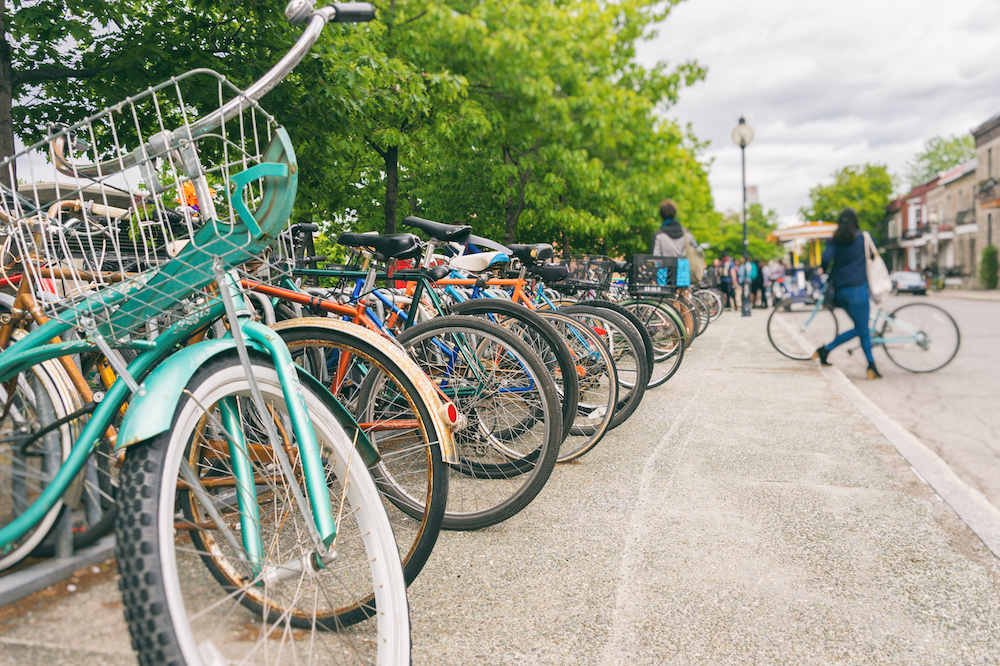
Montreal is also consistently ranked among the most bike-friendly cities in the world. The BIXI bike-share system operates from April to November and offers annual memberships for around $120. For trips in and around downtown, cycling is often faster than both transit and driving.
Owning a Car
Car ownership in Montreal is expensive and, for most people living on the island, largely unnecessary. A 2024 Hardbacon study estimated the full cost of car ownership in Montreal at approximately $1,310 per month when accounting for financing, insurance, gas, parking, and maintenance.
Insurance rates in Quebec are somewhat lower than in Ontario due to the provincial no-fault insurance system, but parking downtown is costly and traffic is congested. For residents with access to good transit or cycling infrastructure, forgoing a car in Montreal is both financially and practically sensible.
The Tax and Wages Equation
The honest conversation about Montreal’s cost of living has to include Quebec’s income tax rates, which are higher than most other provinces. Quebec has a progressive provincial income tax with rates reaching 25.75 percent on income above $119,910 (2025 rates), in addition to federal tax. Combined, Quebecers pay some of the highest marginal income tax rates in North America on middle and upper incomes.
Average salaries in Montreal also tend to run slightly lower than in Toronto or Vancouver. The average annual salary sits around $60,000 and the median household income is approximately $71,000, according to Statistics Canada. This means that while the cost of many things in Montreal is lower, the gap narrows when you factor in lower take-home pay due to higher taxes.
| Montreal | Toronto | Vancouver | |
| Avg. 1-bed rent | ~$1,722 | ~$2,400 | ~$2,700 |
| Median home price (SFH) | ~$625,000 | ~$1.4M+ | ~$1.75M+ |
| Monthly transit pass | $104.50 | ~$156 | ~$100–$150+ |
| Monthly electricity (avg.) | ~$80 | ~$150+ | ~$85 |
| Subsidized daycare (per day) | $8.50 | Not available | Not available |
What Your Money Gets You: Why People Move to Montreal
Cost of living data tells you what things cost. But it doesn’t tell you what you get for that money, and in Montreal’s case, the answer to that question is a big part of why the city draws people from across Canada and around the world.
A Cultural Life That Punches Above Its Weight
Montreal is consistently ranked as Canada’s cultural capital, and it is a title the city genuinely earns. The city runs more festivals per capita than anywhere else in the country. The museum scene is serious, and the theatre scene is bilingual and thriving. Street murals and public art are so pervasive they’ve become a defining visual characteristic of entire neighbourhoods.
And unlike in Toronto or Vancouver, where the cost of going out can be prohibitive, Montreal’s entertainment culture is built around accessibility. Free outdoor festivals, BYO wine restaurants, affordable bar tabs, parks that function as genuine community gathering spaces, the city has a long tradition of civic life that does not require spending heavily to participate in.
Architecture and Neighbourhood Character
Montreal’s built environment is one of its most underappreciated assets. The city’s Victorian row houses, wrought-iron external staircases, cobblestone streets, and mix of French and English architectural traditions give neighbourhoods like the Plateau, Mile End, Rosemont, and Verdun a character that is genuinely distinct from any other North American city.
Bilingualism as a Daily Reality
speak both French and English to varying degrees of fluency, and the city’s informal culture of switching between languages mid-conversation (the famous ‘Bonjour-Hi’) is one of its defining social characteristics.
For English speakers, the reality is that you can function entirely in English in most contexts, particularly in neighbourhoods with higher anglophone populations like NDG and Westmount. Working in French-dominant industries or accessing certain government services requires functional French, however, and making the effort to learn or improve French opens Montreal up significantly.
Food and Restaurant Culture
Montreal’s food scene is the subject of genuine national pride. The city has a restaurant culture that is diverse, affordable, and of consistently high quality across every price point. Montreal bagels, smoked meat, poutine, and the Portuguese chicken of the Plateau are foods that have acquired national recognition, but they are only the surface of a restaurant ecosystem that includes some of Canada’s best fine dining alongside exceptional Vietnamese, Ethiopian, Lebanese, Greek, and Haitian kitchens.
Diversity That Shapes the City
Approximately one in three Montreal residents was born outside Canada. Little Italy, Chinatown, the Greek quarter on Park Avenue, the Vietnamese and Haitian communities of Saint-Michel and Montreal-Nord, and the established Jewish community in Cote-Saint-Luc and Outremont all contribute to a city that is diverse not as a demographic statistic but as a daily lived experience.
Montreal is also notably inclusive on LGBTQ+ dimensions, with the Village being one of the most prominent and well-established LGBTQ+ neighbourhoods in Canada. The city’s participation in multiple UNESCO and international inclusion frameworks reflects a genuine civic commitment that shows up in how the city actually functions.
Sample Monthly Budgets for Living in Montreal
To make the numbers concrete, here are three realistic monthly budget scenarios for Montreal in 2026.
| Expense | Single Person (Modest) | Single Person (Comfortable) | Couple (Comfortable) |
| Rent | $1,400 (off-island or shared) | $1,750 (1-bed, mid-island) | $2,200 (2-bed, mid-island) |
| Utilities | $80 | $100 | $130 |
| Internet + mobile | $90 | $115 | $175 |
| Groceries | $340 | $420 | $750 |
| Transit (STM pass) | $105 | $105 | $210 |
| Dining out / entertainment | $150 | $325 | $500 |
| Insurance + misc. | $60 | $85 | $120 |
| MONTHLY TOTAL | ~$2,225 | ~$2,900 | ~$4,085 |
| Annual income needed (before tax) | ~$42,000+ | ~$55,000+ | ~$80,000+ combined |
Is Montreal Worth the Move?
For most people comparing Montreal to Toronto or Vancouver, the financial case is strong. Rent is substantially lower. Housing is dramatically more accessible for buyers. Electricity costs are among the lowest in North America. And for families with young children, Quebec’s subsidized daycare system alone can represent an annual saving that dwarfs any other cost-of-living advantage in the country.
If you are planning a move to Montreal from another province, Great Canadian Van Lines has been helping Canadians relocate coast to coast for decades. Our team handles every aspect of your cross-country move so you can focus on settling into everything the city has to offer. Get a free estimate today.
